Word Explanation
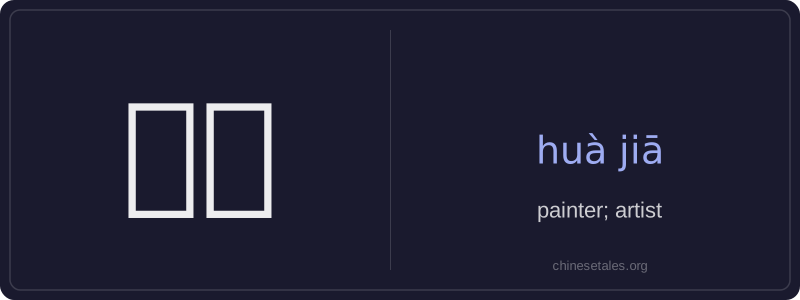
画家 (huà jiā) literally means 'painting person' — 画 (huà) means 'to paint' or 'painting', and 家 (jiā) is a suffix meaning 'expert' or 'specialist', similar to '-ist' in English (e.g., 'artist', 'scientist'). Together, they refer specifically to someone professionally or seriously engaged in creating paintings — not just any visual artist, but one whose primary medium is paint (e.g., oil, watercolor, ink). While it can occasionally be used more broadly for fine artists, it’s narrower than 艺术家 (yìshùjiā, 'artist') and doesn’t typically include sculptors, photographers, or digital designers unless they also paint.
The term carries a respectful, somewhat formal tone and is commonly used in art criticism, museum contexts, biographies, and introductions. It’s neutral in register — appropriate in both spoken and written Chinese — and often appears with modifiers like 著名 (famous), 当代 (contemporary), or 古代 (ancient) to specify the painter’s era or reputation.
Example Sentences
Related Words
背后
背后 literally means 'back + behind' and functions
认同
‘认同’ (tóng rèn) is a verb meaning ‘to ident
不对
不对 (bù duì) literally combines 不 (bù), meani
中学
'Zhōngxué' literally combines 'zhōng' (middle)
见面
见面 literally means 'see face' — combining 见 (t
面条
‘面条’ (miàn tiáo) literally means ‘flour str
外语
‘外语’ literally means ‘outside language’ —
认可
认可 (rèn kě) is a formal, transitive verb meani