Word Explanation
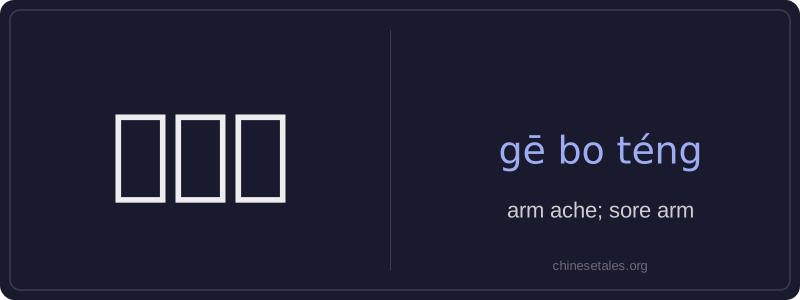
'Gē bo téng' literally combines 'gē bo' (a colloquial, two-syllable form of 'gē', meaning 'arm') and 'téng' (to ache or hurt). Unlike the formal term 'bì' (臂), 'gē bo' is everyday spoken Chinese—common in northern dialects and informal speech—and always appears as a disyllabic unit; you wouldn’t say *'gē téng' or *'bo téng' alone. The phrase refers specifically to discomfort or pain localized in the upper limb, from shoulder to hand, and is frequently used when describing muscle soreness, injury, or post-exercise fatigue.
This noun functions as a subject or object in sentences and does not take aspect markers (e.g., no 'le' or 'guo') since it names a condition, not an action. It’s neutral in register—suitable for talking to doctors, family, or friends—but avoid it in highly formal medical reports, where terms like '上肢疼痛' (shàngzhī téngtòng) are preferred. It’s rarely used metaphorically and almost never with measure words unless quantified (e.g., '这阵子胳膊疼' — 'my arm has been hurting lately').
Example Sentences
Related Words
背后
背后 literally means 'back + behind' and functions
认同
‘认同’ (tóng rèn) is a verb meaning ‘to ident
不对
不对 (bù duì) literally combines 不 (bù), meani
中学
'Zhōngxué' literally combines 'zhōng' (middle)
见面
见面 literally means 'see face' — combining 见 (t
面条
‘面条’ (miàn tiáo) literally means ‘flour str
外语
‘外语’ literally means ‘outside language’ —
认可
认可 (rèn kě) is a formal, transitive verb meani