Word Explanation
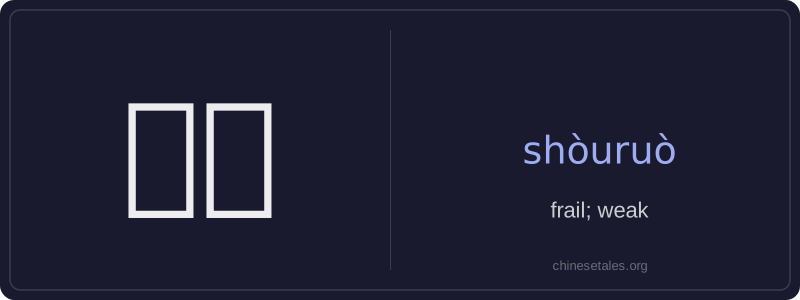
瘦弱 (shòuruò) is an adjective meaning 'frail' or 'weak', especially describing someone who is both underweight and physically weak. It combines 瘦 (shòu), meaning 'thin' or 'lean', and 弱 (ruò), meaning 'weak' or 'feeble'. Together, they emphasize a state of physical vulnerability—not just slimness, but a lack of strength or stamina, often due to illness, malnutrition, or chronic fatigue.
This word is commonly used in medical, caregiving, or descriptive contexts—for example, when discussing health conditions, elderly individuals, recovering patients, or undernourished children. It carries a slightly sympathetic or concerned tone and is rarely used for healthy thinness; for that, words like 苗条 (miáotiǎo) or 瘦 (shòu) alone are more appropriate. 瘦弱 is not typically used for inanimate objects or abstract concepts—it refers specifically to living beings’ physical constitution.
Example Sentences
Related Words
背后
背后 literally means 'back + behind' and functions
认同
‘认同’ (tóng rèn) is a verb meaning ‘to ident
不对
不对 (bù duì) literally combines 不 (bù), meani
中学
'Zhōngxué' literally combines 'zhōng' (middle)
见面
见面 literally means 'see face' — combining 见 (t
面条
‘面条’ (miàn tiáo) literally means ‘flour str
外语
‘外语’ literally means ‘outside language’ —
认可
认可 (rèn kě) is a formal, transitive verb meani