Word Explanation
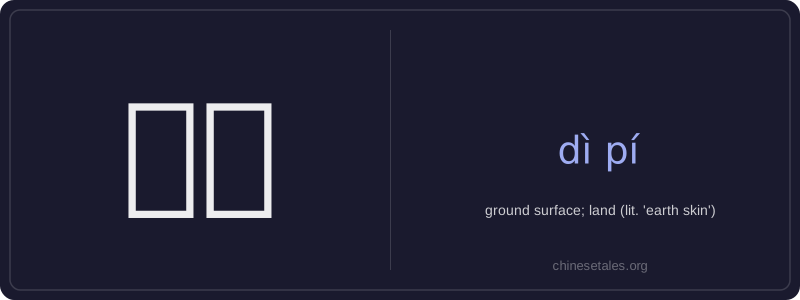
‘地皮’ literally means 'earth skin' — combining 地 (dì, 'earth' or 'ground') and 皮 (pí, 'skin'). It refers to the surface layer of land, especially in contexts involving ownership, development, or physical terrain. Unlike the more general term 土地 (tǔdì, 'land'), 地皮 emphasizes the tangible, usable top layer — often discussed in real estate, construction, or agriculture. It carries a slightly concrete, even colloquial tone, and is frequently used when talking about land as a commodity: buying, selling, leveling, or clearing it.
This word appears commonly in urban planning, property news, and everyday conversations about building sites or vacant lots. While not formal in academic or legal documents (where 土地 or 用地 is preferred), it’s widely understood and natural in spoken Mandarin. Its imagery — comparing land to 'skin' — subtly underscores how thin and precious the cultivable or buildable surface layer is, especially in densely populated areas.
Example Sentences
Related Words
背后
背后 literally means 'back + behind' and functions
认同
‘认同’ (tóng rèn) is a verb meaning ‘to ident
不对
不对 (bù duì) literally combines 不 (bù), meani
中学
'Zhōngxué' literally combines 'zhōng' (middle)
见面
见面 literally means 'see face' — combining 见 (t
面条
‘面条’ (miàn tiáo) literally means ‘flour str
外语
‘外语’ literally means ‘outside language’ —
认可
认可 (rèn kě) is a formal, transitive verb meani