Word Explanation
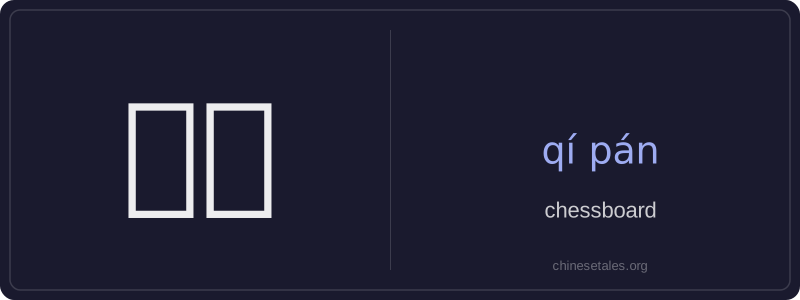
棋盘 (qí pán) literally means 'chess board' — 棋 (qí) refers to board games like Chinese chess (xiàngqí), Go (wéiqí), or international chess, while 盘 (pán) means 'tray', 'plate', or 'flat surface'. Together, they denote the gridded or lined surface on which such strategy games are played. Though often associated with traditional Chinese chess, the term is also used broadly for Go boards and sometimes even for Western chessboards in Chinese contexts.
The word appears frequently in daily life — in hobby shops, parks where elders play xiangqi, schools teaching logic games, or cultural discussions about strategy and patience. It carries subtle connotations of order, planning, and intellectual engagement. Unlike generic terms like 'board', 棋盘 implies a purpose-built, standardized playing surface with specific markings (e.g., the 'river' in xiangqi or the 19×19 grid in Go).
Example Sentences
Related Words
背后
背后 literally means 'back + behind' and functions
认同
‘认同’ (tóng rèn) is a verb meaning ‘to ident
不对
不对 (bù duì) literally combines 不 (bù), meani
中学
'Zhōngxué' literally combines 'zhōng' (middle)
见面
见面 literally means 'see face' — combining 见 (t
面条
‘面条’ (miàn tiáo) literally means ‘flour str
外语
‘外语’ literally means ‘outside language’ —
认可
认可 (rèn kě) is a formal, transitive verb meani