Word Explanation
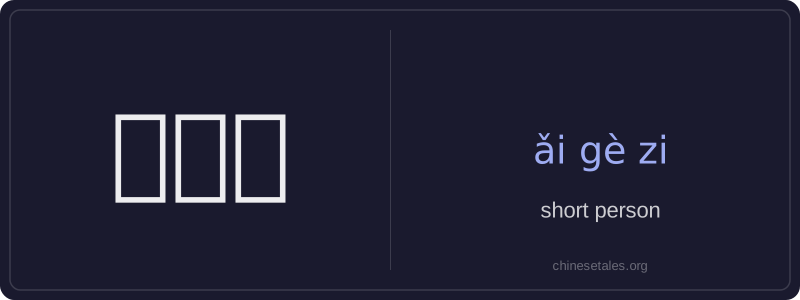
矮个子 literally combines 矮 (ǎi, 'short' or 'low in height'), 个 (gè, a common measure word for people), and 子 (zi, a diminutive or nominal suffix). Together, it forms a colloquial noun meaning 'a short person' — typically referring to an adult whose height is noticeably below average. Unlike formal terms like 身材矮小 (shēncai ǎixiǎo), 矮个子 is neutral and widely used in everyday speech, especially when describing physical appearance or making comparisons.
The term carries no inherent negative connotation, though tone and context determine whether it sounds objective, affectionate, or teasing. It’s often used in contrast with 高个子 (tall person) and appears frequently in descriptions of people in workplaces, schools, or social settings. Note that 矮个子 refers to the person as a whole, not just their height — so it functions as a noun phrase, not an adjective.
Example Sentences
Related Words
背后
背后 literally means 'back + behind' and functions
认同
‘认同’ (tóng rèn) is a verb meaning ‘to ident
不对
不对 (bù duì) literally combines 不 (bù), meani
中学
'Zhōngxué' literally combines 'zhōng' (middle)
见面
见面 literally means 'see face' — combining 见 (t
面条
‘面条’ (miàn tiáo) literally means ‘flour str
外语
‘外语’ literally means ‘outside language’ —
认可
认可 (rèn kě) is a formal, transitive verb meani