Word Explanation
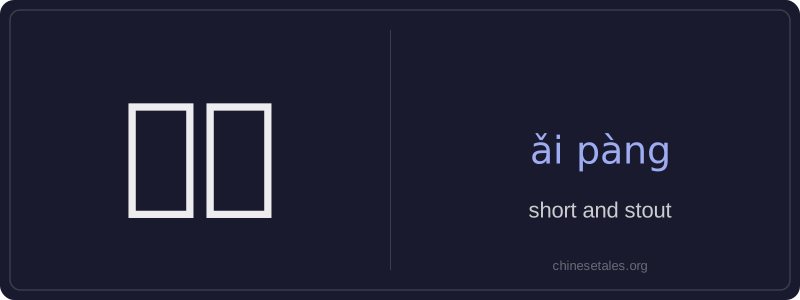
矮胖 (ǎi pàng) is an adjective meaning 'short and stout'—describing someone or something with a low height and a broad, rounded, or stocky build. The first character 矮 means 'short' (especially in stature), while 胖 means 'fat' or 'plump', but here it conveys solidity and thickness rather than excess weight. Together, they form a compound that emphasizes compactness and heaviness in proportion, not necessarily obesity.
This term is often used descriptively and neutrally in everyday speech, especially when talking about animals (like certain dog breeds or livestock), objects (e.g., furniture or containers), or people in informal or observational contexts. It carries no strong negative connotation by itself, though tone and context matter—using it for people may sound blunt without softening phrases like '看起来很结实' ('looks very sturdy'). It’s more common in spoken Chinese than formal writing.
Example Sentences
Related Words
背后
背后 literally means 'back + behind' and functions
认同
‘认同’ (tóng rèn) is a verb meaning ‘to ident
不对
不对 (bù duì) literally combines 不 (bù), meani
中学
'Zhōngxué' literally combines 'zhōng' (middle)
见面
见面 literally means 'see face' — combining 见 (t
面条
‘面条’ (miàn tiáo) literally means ‘flour str
外语
‘外语’ literally means ‘outside language’ —
认可
认可 (rèn kě) is a formal, transitive verb meani