Word Explanation
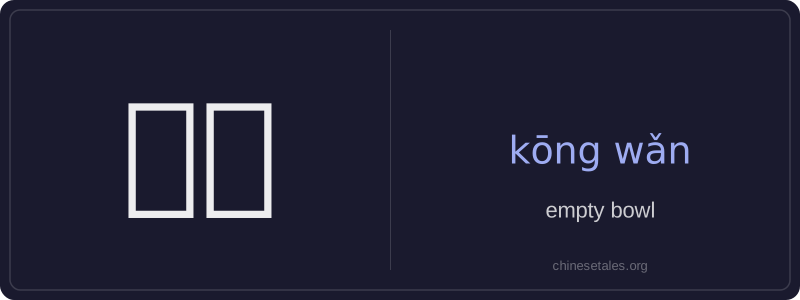
‘空碗’ literally means ‘empty bowl’ — it combines 空 (kōng), meaning ‘empty’ or ‘vacant’, and 碗 (wǎn), meaning ‘bowl’. Together, they refer to a bowl that contains no food or liquid. This term is commonly used in everyday contexts such as dining, kitchen cleanup, or meal preparation, and often carries subtle implications — for example, an empty bowl may signal that someone has finished eating, is still hungry, or needs a refill.
Unlike more formal or literary terms like ‘空器皿’ (empty vessel), ‘空碗’ is simple, concrete, and grounded in daily life. It appears frequently in spoken Mandarin and informal writing, especially when describing household routines, children’s meals, or restaurant service. The word is neutral in register but can take on emotional nuance depending on context — e.g., a child’s ‘空碗’ might evoke care or concern, while a guest’s ‘空碗’ may prompt immediate refilling as a sign of hospitality.
Example Sentences
Related Words
背后
背后 literally means 'back + behind' and functions
认同
‘认同’ (tóng rèn) is a verb meaning ‘to ident
不对
不对 (bù duì) literally combines 不 (bù), meani
中学
'Zhōngxué' literally combines 'zhōng' (middle)
见面
见面 literally means 'see face' — combining 见 (t
面条
‘面条’ (miàn tiáo) literally means ‘flour str
外语
‘外语’ literally means ‘outside language’ —
认可
认可 (rèn kě) is a formal, transitive verb meani