Word Explanation
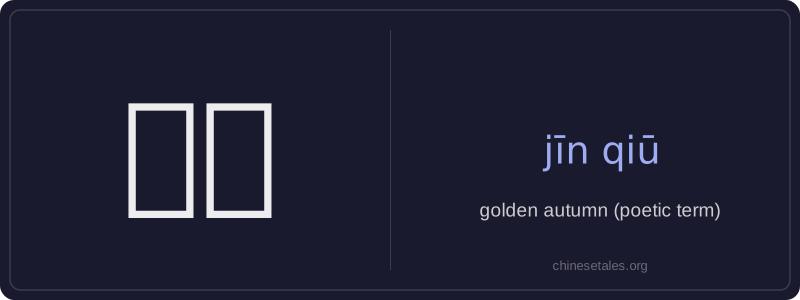
‘金秋’ (jīn qiū) is a poetic, literary term meaning ‘golden autumn’. It combines 金 (jīn), literally ‘gold’, and 秋 (qiū), meaning ‘autumn’ or ‘fall’. The character 金 evokes the warm, radiant hues of autumn foliage—golden ginkgo leaves, amber maple trees, and sunlit harvest fields—while 秋 anchors it in the seasonal context. Unlike the neutral term 秋天 (qiūtiān), 金秋 carries strong aesthetic and emotional resonance, suggesting abundance, maturity, and serene beauty.
This expression is widely used in formal writing, poetry, speeches, and media headlines—especially during September and October in China—to celebrate harvest festivals, Mid-Autumn events, or cultural exhibitions. It rarely appears in casual daily speech; instead, it’s reserved for elevated, evocative contexts where tone and imagery matter more than literal precision. Because it’s a fixed compound noun, it functions as a single unit and doesn’t take modifiers like adjectives directly before it (e.g., *very golden autumn* is ungrammatical—instead, say ‘这真是一个金秋’).
Example Sentences
Related Words
背后
背后 literally means 'back + behind' and functions
认同
‘认同’ (tóng rèn) is a verb meaning ‘to ident
不对
不对 (bù duì) literally combines 不 (bù), meani
中学
'Zhōngxué' literally combines 'zhōng' (middle)
见面
见面 literally means 'see face' — combining 见 (t
面条
‘面条’ (miàn tiáo) literally means ‘flour str
外语
‘外语’ literally means ‘outside language’ —
认可
认可 (rèn kě) is a formal, transitive verb meani