Word Explanation
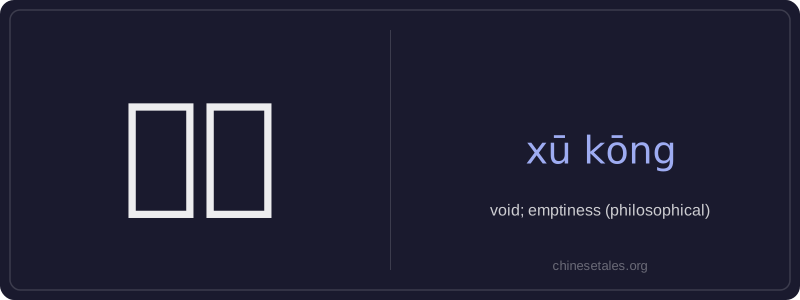
‘虚空’ (xū kōng) is a philosophical noun meaning ‘void’ or ‘emptiness’, especially in Daoist, Buddhist, and classical Chinese thought. It does not refer to physical emptiness like an empty room, but rather to the fundamental insubstantiality of all phenomena—the idea that things lack inherent, independent existence. The character 虚 (xū) means ‘empty’, ‘insubstantial’, or ‘unreal’, often implying hollowness or lack of solidity; 空 (kōng) means ‘empty’, ‘void’, or ‘sky’, and carries strong metaphysical weight, especially in Buddhism where it denotes śūnyatā (emptiness as ultimate reality). Together, they intensify the sense of profound ontological openness—not mere absence, but a dynamic, non-dual ground from which all things arise and return.
This term appears frequently in classical texts, meditation instruction, poetry, and modern philosophical or literary discourse. It is rarely used in casual speech and carries solemn, contemplative, or poetic register. Learners should avoid confusing it with everyday words for ‘empty’ like 空的 (kōng de) or 没有 (méiyǒu), which describe concrete absence or lack of content.
Example Sentences
Related Words
背后
背后 literally means 'back + behind' and functions
认同
‘认同’ (tóng rèn) is a verb meaning ‘to ident
不对
不对 (bù duì) literally combines 不 (bù), meani
中学
'Zhōngxué' literally combines 'zhōng' (middle)
见面
见面 literally means 'see face' — combining 见 (t
面条
‘面条’ (miàn tiáo) literally means ‘flour str
外语
‘外语’ literally means ‘outside language’ —
认可
认可 (rèn kě) is a formal, transitive verb meani