Word Explanation
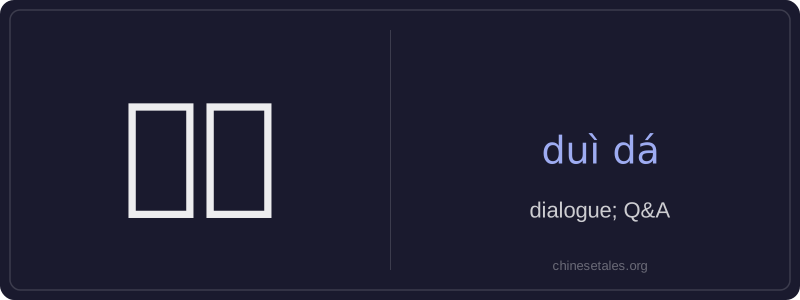
‘對答’ literally combines 對 (duì, 'to face, to match, to respond') and 答 (dá, 'to answer'), forming a compound noun meaning 'dialogue' or 'Q&A' — especially formal, structured, or reciprocal verbal exchange. It emphasizes mutual, back-and-forth interaction rather than one-sided speech. While it can describe everyday conversation, it’s more commonly used in contexts like classroom Q&A sessions, interviews, diplomatic exchanges, or scripted dialogues where responses directly follow questions.
The term carries a slightly literary or formal register; you’ll rarely hear it in casual chats among friends (where people say 聊天 or 问答 instead). It often appears in written Chinese — textbooks, news reports on official meetings, or educational materials — and may imply clarity, precision, and turn-taking. Unlike the verb phrase 對話 (duìhuà), which means 'to converse', 對答 functions almost exclusively as a noun and stresses the question-answer dynamic itself.
Example Sentences
Related Words
背后
背后 literally means 'back + behind' and functions
认同
‘认同’ (tóng rèn) is a verb meaning ‘to ident
不对
不对 (bù duì) literally combines 不 (bù), meani
中学
'Zhōngxué' literally combines 'zhōng' (middle)
见面
见面 literally means 'see face' — combining 见 (t
面条
‘面条’ (miàn tiáo) literally means ‘flour str
外语
‘外语’ literally means ‘outside language’ —
认可
认可 (rèn kě) is a formal, transitive verb meani