Word Explanation
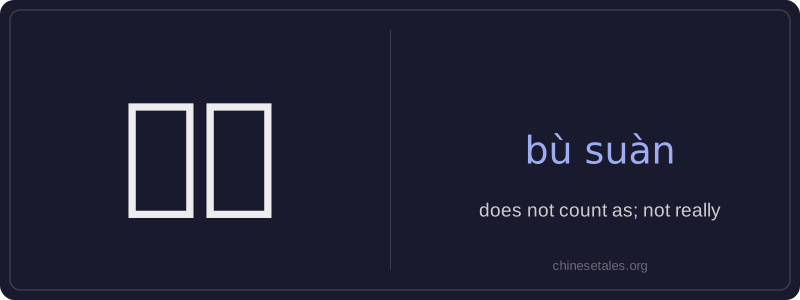
不算 literally combines 'not' (不) and 'to count/calculate' (算), forming an adverbial phrase meaning 'does not count as' or 'is not really' — used to downplay or soften a judgment, description, or classification. It often appears before adjectives or nouns to indicate something falls just short of a category or standard, without strong negation.
This expression is common in casual speech and writing when making comparative or relative assessments — for example, describing temperature, difficulty, cost, or effort as 'not really high' or 'not quite serious'. It carries a tone of moderation or understatement, helping speakers sound polite or reserved rather than absolute. 不算 is never used alone; it always modifies another word or phrase, typically followed directly by an adjective (e.g., 不算贵) or noun (e.g., 不算问题).
Example Sentences
Related Words
背后
背后 literally means 'back + behind' and functions
认同
‘认同’ (tóng rèn) is a verb meaning ‘to ident
不对
不对 (bù duì) literally combines 不 (bù), meani
中学
'Zhōngxué' literally combines 'zhōng' (middle)
见面
见面 literally means 'see face' — combining 见 (t
面条
‘面条’ (miàn tiáo) literally means ‘flour str
外语
‘外语’ literally means ‘outside language’ —
认可
认可 (rèn kě) is a formal, transitive verb meani