Word Explanation
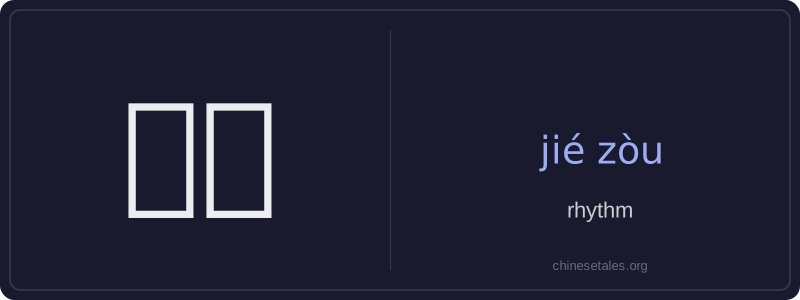
节奏 (jié zòu) literally combines 节 (jié), meaning 'section' or 'node', and 奏 (zòu), meaning 'to play (music)' or 'to perform'. Together, they form the abstract noun 'rhythm' — the regular, repeated pattern of sound, movement, or time that gives structure and flow. It’s used widely in music, dance, poetry, and even daily life to describe the pace or cadence of activities.
Unlike English 'rhythm', which is mostly musical, 节奏 carries a broader sense — it can refer to the natural tempo of speech, the pace of work, the flow of a film scene, or even the biological timing of bodily functions. Native speakers often say something has 'good rhythm' (节奏好) to praise its smoothness and balance, whether describing a jazz solo, a runner’s stride, or a well-edited video.
Example Sentences
Related Words
背后
背后 literally means 'back + behind' and functions
认同
‘认同’ (tóng rèn) is a verb meaning ‘to ident
不对
不对 (bù duì) literally combines 不 (bù), meani
中学
'Zhōngxué' literally combines 'zhōng' (middle)
见面
见面 literally means 'see face' — combining 见 (t
面条
‘面条’ (miàn tiáo) literally means ‘flour str
外语
‘外语’ literally means ‘outside language’ —
认可
认可 (rèn kě) is a formal, transitive verb meani