Word Explanation
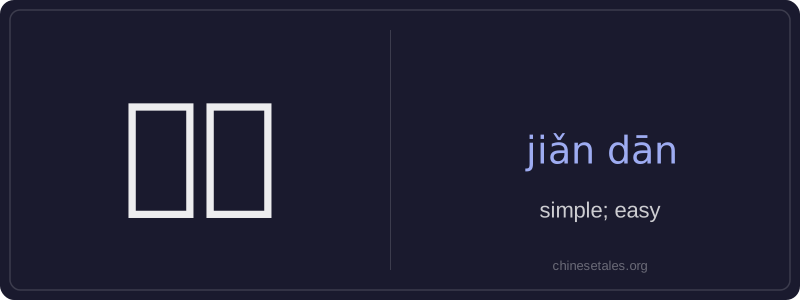
简单 (jiǎn dān) is an adjective meaning 'simple' or 'easy', describing something that is not complicated, requires little effort, or has few parts or steps. The character 简 (jiǎn) means 'brief', 'concise', or 'unadorned', while 单 (dān) means 'single', 'sole', or 'uncomplicated'. Together, they reinforce the idea of minimal complexity — literally 'brief and single', suggesting straightforwardness without layers or distractions.
This word is widely used in everyday contexts: explaining instructions ('The method is simple'), evaluating difficulty ('This math problem is easy'), or describing design or lifestyle ('a simple meal', 'a simple life'). It can modify nouns directly (e.g., 简单的问题 — 'a simple question') or follow 是/很/比较 for emphasis (e.g., 这个软件很简单 — 'This software is very simple'). While often neutral and positive, it may occasionally carry a subtle connotation of 'oversimplified' depending on context, especially in academic or technical discussions.
Example Sentences
Related Words
背后
背后 literally means 'back + behind' and functions
认同
‘认同’ (tóng rèn) is a verb meaning ‘to ident
不对
不对 (bù duì) literally combines 不 (bù), meani
中学
'Zhōngxué' literally combines 'zhōng' (middle)
见面
见面 literally means 'see face' — combining 见 (t
面条
‘面条’ (miàn tiáo) literally means ‘flour str
外语
‘外语’ literally means ‘outside language’ —
认可
认可 (rèn kě) is a formal, transitive verb meani