Word Explanation
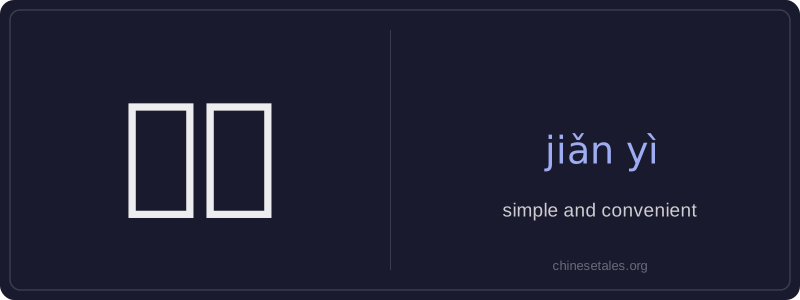
‘简易’ (jiǎn yì) is an adjective meaning ‘simple and convenient’ — it emphasizes both ease of use and lack of complexity. The first character 简 (jiǎn) means ‘simple’, ‘brief’, or ‘uncomplicated’, while 易 (yì) means ‘easy’ or ‘convenient’. Together, they form a compound that conveys efficiency without sacrificing functionality — not just ‘simple’ in appearance, but genuinely user-friendly in practice. It’s commonly used to describe tools, instructions, systems, or procedures designed for quick understanding and effortless operation.
This word appears frequently in everyday contexts: product packaging (e.g., ‘简易安装’ — ‘simple installation’), digital interfaces (‘简易版APP’ — ‘lightweight app version’), or daily life solutions (e.g., ‘简易帐篷’ — ‘pop-up tent’). Unlike 单纯 (dān chún, ‘mere’ or ‘pure’) or 简单 (jiǎn dān, ‘simple’ alone), 简易 carries a stronger implication of practical convenience — it suggests the simplicity serves a functional purpose, not just aesthetic minimalism.
Example Sentences
Related Words
背后
背后 literally means 'back + behind' and functions
认同
‘认同’ (tóng rèn) is a verb meaning ‘to ident
不对
不对 (bù duì) literally combines 不 (bù), meani
中学
'Zhōngxué' literally combines 'zhōng' (middle)
见面
见面 literally means 'see face' — combining 见 (t
面条
‘面条’ (miàn tiáo) literally means ‘flour str
外语
‘外语’ literally means ‘outside language’ —
认可
认可 (rèn kě) is a formal, transitive verb meani