Word Explanation
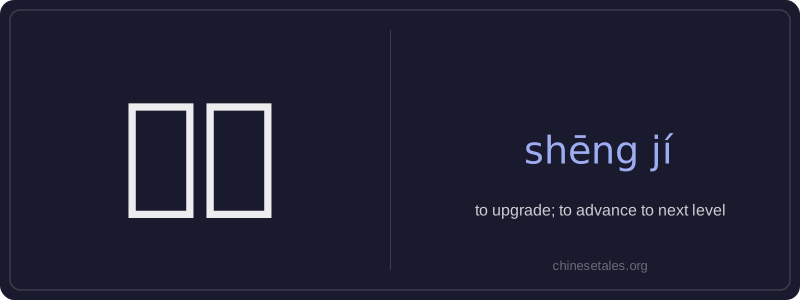
升级 (shēng jí) literally combines 升 (shēng), meaning 'to rise' or 'to ascend', and 级 (jí), meaning 'level' or 'grade'. Together, they express the idea of moving upward to a higher stage — whether in software, skills, status, or systems. It’s commonly used in technical contexts (e.g., upgrading an app or operating system), but also applies metaphorically to personal development, job promotions, or even product versions.
The word functions primarily as a verb and is often followed by objects like 软件 (software), 系统 (system), or 职位 (position). It can appear with aspect markers (e.g., 了, 过) or as a noun in phrases like 系统升级 (system upgrade). Unlike some verbs, 升级 rarely takes direct objects without measure words or classifiers in formal usage, and it’s seldom used in past-tense constructions without context or auxiliary particles.
Example Sentences
Related Words
背后
背后 literally means 'back + behind' and functions
认同
‘认同’ (tóng rèn) is a verb meaning ‘to ident
不对
不对 (bù duì) literally combines 不 (bù), meani
中学
'Zhōngxué' literally combines 'zhōng' (middle)
见面
见面 literally means 'see face' — combining 见 (t
面条
‘面条’ (miàn tiáo) literally means ‘flour str
外语
‘外语’ literally means ‘outside language’ —
认可
认可 (rèn kě) is a formal, transitive verb meani