Word Explanation
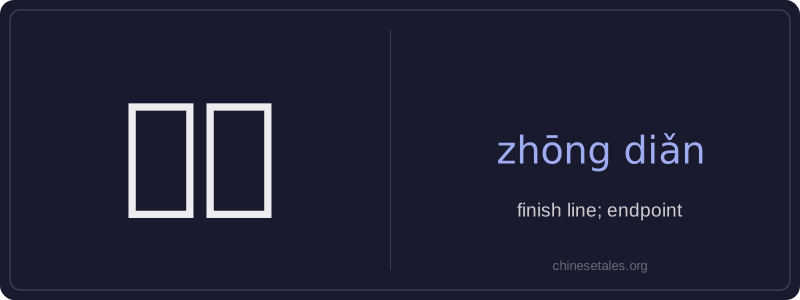
终点 literally means 'end point' — combining 终 (zhōng), meaning 'final' or 'concluding', and 点 (diǎn), meaning 'point' or 'spot'. It refers to the fixed location where a journey, race, process, or activity concludes. In physical contexts, it most commonly denotes the finish line of a race or marathon; in abstract usage, it can signify the conclusion of a project, a life stage, or even a philosophical goal.
The term carries neutral-to-formal register and is widely used in sports commentary, transportation signage (e.g., bus route maps), academic writing, and everyday conversation about goals or outcomes. Unlike more colloquial terms like 结束 (jiéshù, 'to end'), 终点 emphasizes a spatial or conceptual terminus — a specific place or milestone rather than just the act of stopping.
Example Sentences
Related Words
背后
背后 literally means 'back + behind' and functions
认同
‘认同’ (tóng rèn) is a verb meaning ‘to ident
不对
不对 (bù duì) literally combines 不 (bù), meani
中学
'Zhōngxué' literally combines 'zhōng' (middle)
见面
见面 literally means 'see face' — combining 见 (t
面条
‘面条’ (miàn tiáo) literally means ‘flour str
外语
‘外语’ literally means ‘outside language’ —
认可
认可 (rèn kě) is a formal, transitive verb meani