Word Explanation
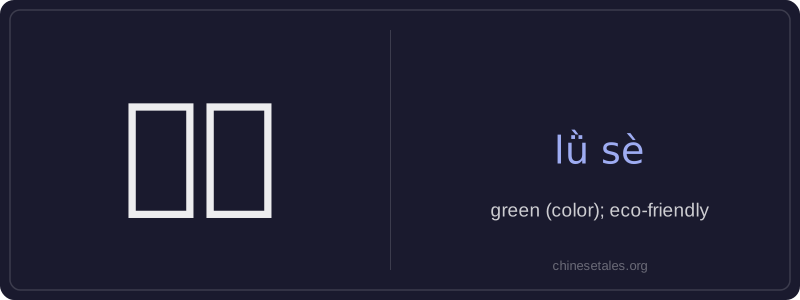
绿色 (lǜ sè) literally means 'green color' — 绿 (lǜ) means 'green' and 色 (sè) means 'color'. As a noun, it refers to the color green itself: the hue of grass, leaves, and many vegetables. It’s commonly used in descriptions of nature, clothing, traffic signals, and digital interfaces.
As an adjective, 绿色 carries an extended, modern meaning: 'eco-friendly' or 'environmentally sustainable'. This usage emerged from associations between green and nature, health, and environmental protection — for example, 绿色能源 (lǜ sè néng yuán, 'green energy') or 绿色食品 (lǜ sè shí pǐn, 'organic food'). Unlike English, where 'green' as an adjective often requires context to distinguish color from sustainability, Chinese relies on collocation — the noun it modifies usually clarifies which sense applies.
Example Sentences
Related Words
背后
背后 literally means 'back + behind' and functions
认同
‘认同’ (tóng rèn) is a verb meaning ‘to ident
不对
不对 (bù duì) literally combines 不 (bù), meani
中学
'Zhōngxué' literally combines 'zhōng' (middle)
见面
见面 literally means 'see face' — combining 见 (t
面条
‘面条’ (miàn tiáo) literally means ‘flour str
外语
‘外语’ literally means ‘outside language’ —
认可
认可 (rèn kě) is a formal, transitive verb meani