Word Explanation
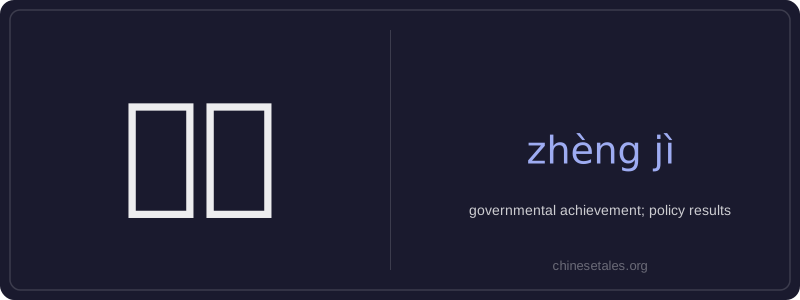
‘政绩’ (zhèng jì) literally combines ‘政’ (zhèng), meaning ‘government’ or ‘politics’, and ‘绩’ (jì), meaning ‘achievement’ or ‘record of performance’. Together, it refers specifically to the measurable results or accomplishments of a government official or agency—especially in areas like economic growth, infrastructure development, environmental improvement, or public service delivery. It is commonly used in political reporting, official evaluations, and academic discussions about governance.
The term carries evaluative weight: high ‘政绩’ often signals competence and success, while low or questionable ‘政绩’ may imply inefficiency or even performance-driven misconduct (e.g., pursuing flashy projects at the expense of long-term welfare). It’s frequently discussed in relation to official promotion criteria, policy implementation effectiveness, and public accountability—making it central to understanding how Chinese bureaucratic performance is assessed and communicated.
Example Sentences
Related Words
背后
背后 literally means 'back + behind' and functions
认同
‘认同’ (tóng rèn) is a verb meaning ‘to ident
不对
不对 (bù duì) literally combines 不 (bù), meani
中学
'Zhōngxué' literally combines 'zhōng' (middle)
见面
见面 literally means 'see face' — combining 见 (t
面条
‘面条’ (miàn tiáo) literally means ‘flour str
外语
‘外语’ literally means ‘outside language’ —
认可
认可 (rèn kě) is a formal, transitive verb meani