Word Explanation
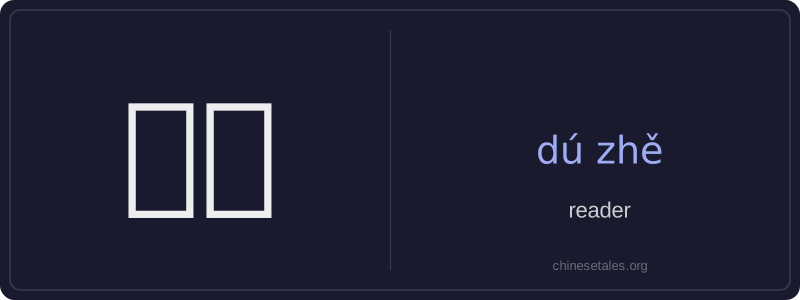
'读者' (dú zhě) literally means 'one who reads' — combining the verb '读' (dú, to read) and the noun suffix '者' (zhě), which denotes a person performing an action. It is a formal, neutral term for 'reader' and is commonly used in written contexts such as publishing, journalism, education, and online content. Unlike colloquial alternatives like '看书的人' (a person who reads books), '读者' carries a sense of intentionality and engagement with texts — whether news articles, novels, academic papers, or blog posts.
The word appears frequently in institutional language: magazines often open letters with '亲爱的读者' (dear readers); editors refer to audience feedback as '读者来信' (letters from readers); and libraries may display notices like '读者须知' (information for readers). While it can refer to any reader, it seldom implies casual or passive reading — rather, it suggests an active, thoughtful recipient of written material.
Example Sentences
Related Words
背后
背后 literally means 'back + behind' and functions
认同
‘认同’ (tóng rèn) is a verb meaning ‘to ident
不对
不对 (bù duì) literally combines 不 (bù), meani
中学
'Zhōngxué' literally combines 'zhōng' (middle)
见面
见面 literally means 'see face' — combining 见 (t
面条
‘面条’ (miàn tiáo) literally means ‘flour str
外语
‘外语’ literally means ‘outside language’ —
认可
认可 (rèn kě) is a formal, transitive verb meani