Word Explanation
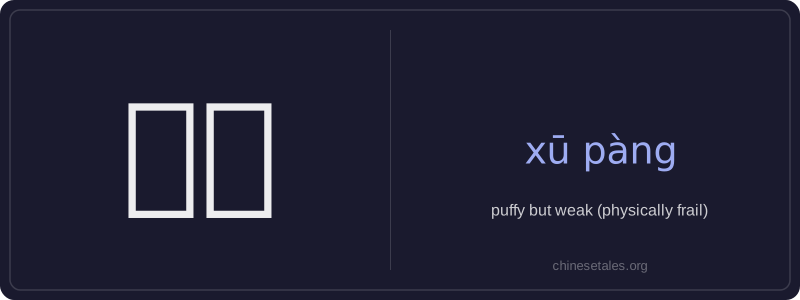
‘虚胖’ literally combines ‘xū’ (deficient, weak, lacking vital energy) and ‘pàng’ (plump, swollen, or overweight). It describes a physical condition where a person appears overweight or puffy—often with soft, flabby flesh—but lacks strength, stamina, or underlying vitality. Unlike healthy muscle mass or simple obesity, 虚胖 reflects an imbalance in traditional Chinese medicine: insufficient qi (vital energy) and/or yang, leading to poor metabolism, water retention, and fatigue despite the outward fullness.
This term is commonly used in health discussions, medical consultations, and wellness contexts—especially when distinguishing between metabolically unhealthy weight gain and robust, muscular build. It carries a subtle evaluative tone, implying fragility beneath the surface appearance. While not a clinical diagnosis in Western medicine, it’s widely understood in Chinese-speaking communities as a holistic indicator of suboptimal physical resilience.
Example Sentences
Related Words
背后
背后 literally means 'back + behind' and functions
认同
‘认同’ (tóng rèn) is a verb meaning ‘to ident
不对
不对 (bù duì) literally combines 不 (bù), meani
中学
'Zhōngxué' literally combines 'zhōng' (middle)
见面
见面 literally means 'see face' — combining 见 (t
面条
‘面条’ (miàn tiáo) literally means ‘flour str
外语
‘外语’ literally means ‘outside language’ —
认可
认可 (rèn kě) is a formal, transitive verb meani