Word Explanation
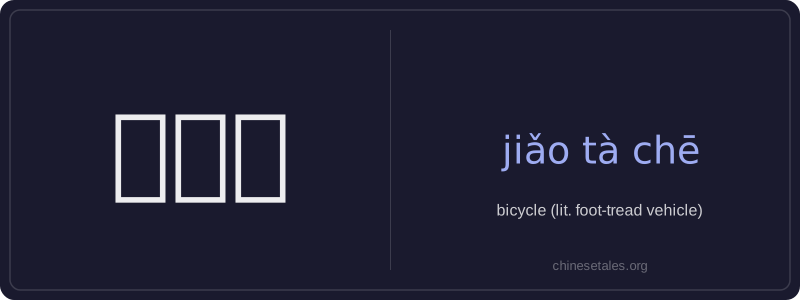
‘脚踏车’ (jiǎo tà chē) literally means ‘foot-tread vehicle’—a transparent compound where 脚 (jiǎo) means ‘foot’, 踏 (tà) means ‘to tread or step on’, and 车 (chē) means ‘vehicle’. It refers specifically to a human-powered bicycle with pedals, emphasizing the physical action of pedaling with one’s feet. While technically accurate and widely understood, this term is more common in Taiwan, Malaysia, and Singapore; in mainland China, ‘自行车’ (zì xíng chē) is standard.
The word reflects traditional Chinese lexical creativity: instead of borrowing foreign terms like ‘bike’, it builds meaning from native morphemes. It’s often used in casual speech, signage (e.g., parking signs), and educational contexts for children. Though descriptive, it’s slightly more formal or regional than colloquial alternatives like ‘单车’ (dān chē) in southern China or Hong Kong.
Example Sentences
Related Words
背后
背后 literally means 'back + behind' and functions
认同
‘认同’ (tóng rèn) is a verb meaning ‘to ident
不对
不对 (bù duì) literally combines 不 (bù), meani
中学
'Zhōngxué' literally combines 'zhōng' (middle)
见面
见面 literally means 'see face' — combining 见 (t
面条
‘面条’ (miàn tiáo) literally means ‘flour str
外语
‘外语’ literally means ‘outside language’ —
认可
认可 (rèn kě) is a formal, transitive verb meani