Word Explanation
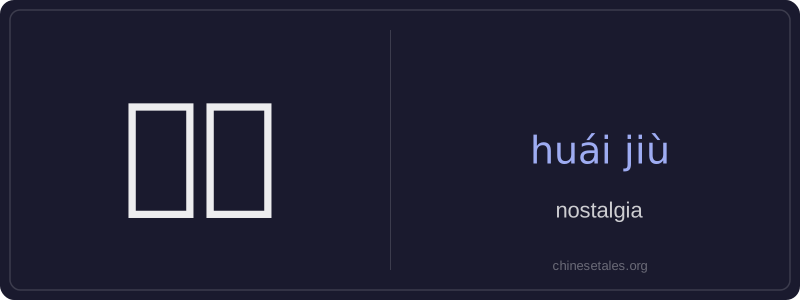
‘Huái jiù’ literally combines ‘huái’ (to cherish, to hold in one’s heart) and ‘jiù’ (old, past, former). Together, it means a tender, often bittersweet longing for the past—especially for people, places, experiences, or cultural artifacts from earlier times. Unlike general ‘memory’, 怀旧 carries emotional warmth and sentimental value, not just factual recall.
This noun is commonly used in contexts like music, film, fashion, childhood memories, or historical settings. It appears in phrases such as ‘怀旧情怀’ (nostalgic sentiment), ‘怀旧风’ (retro style), or ‘怀旧歌曲’ (nostalgic song). While it can function as a verb in rare literary contexts (e.g., ‘他总爱怀旧’), it is overwhelmingly used as an uncountable noun and rarely takes measure words. It’s neutral in register—suitable for both spoken and written Chinese.
Example Sentences
Related Words
背后
背后 literally means 'back + behind' and functions
认同
‘认同’ (tóng rèn) is a verb meaning ‘to ident
不对
不对 (bù duì) literally combines 不 (bù), meani
中学
'Zhōngxué' literally combines 'zhōng' (middle)
见面
见面 literally means 'see face' — combining 见 (t
面条
‘面条’ (miàn tiáo) literally means ‘flour str
外语
‘外语’ literally means ‘outside language’ —
认可
认可 (rèn kě) is a formal, transitive verb meani