Word Explanation
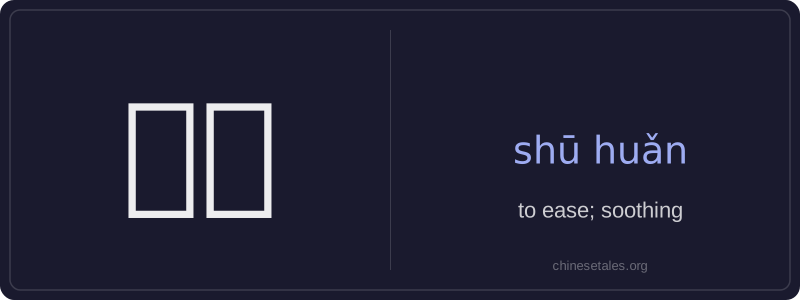
舒缓 is a compound word formed from 舒 (shū), meaning 'comfortable' or 'at ease', and 缓 (huǎn), meaning 'slow' or 'gentle'. Together, they convey the idea of gradually reducing tension, pain, or stress—like easing pressure in a gentle, unhurried way. It emphasizes both physical relief and emotional calm, often implying a soothing, restorative effect.
This word is commonly used in health-related contexts (e.g., describing treatments, music, or breathing techniques that reduce discomfort) and emotional settings (e.g., calming anxiety or softening harsh feelings). It frequently appears as a verb (e.g., 舒缓压力 — 'ease stress') or an adjective (e.g., 舒缓的音乐 — 'soothing music'). While it shares some ground with words like 'relieve' or 'alleviate', 舒缓 carries a gentler, more holistic connotation—less about eliminating something entirely and more about gently restoring balance and comfort.
Example Sentences
Related Words
背后
背后 literally means 'back + behind' and functions
认同
‘认同’ (tóng rèn) is a verb meaning ‘to ident
不对
不对 (bù duì) literally combines 不 (bù), meani
中学
'Zhōngxué' literally combines 'zhōng' (middle)
见面
见面 literally means 'see face' — combining 见 (t
面条
‘面条’ (miàn tiáo) literally means ‘flour str
外语
‘外语’ literally means ‘outside language’ —
认可
认可 (rèn kě) is a formal, transitive verb meani