Word Explanation
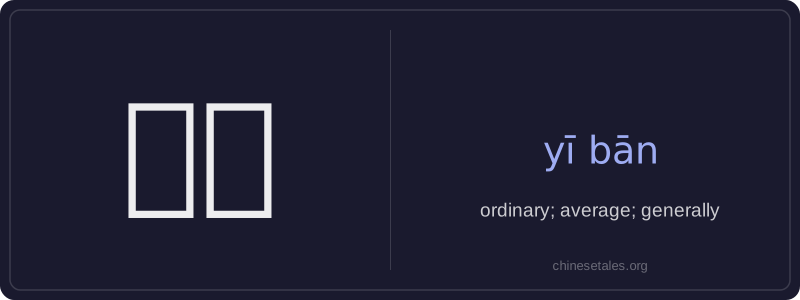
一般 means 'ordinary', 'average', or 'generally'—it describes something typical, not special or exceptional. The character 一 (yī) means 'one', and 般 (bān) originally meant 'kind' or 'sort'; together, 一般 literally suggests 'one kind'—that is, the standard or usual kind. It’s commonly used to describe people, objects, situations, or behaviors that fit common expectations.
This word functions flexibly: as an adjective before a noun (e.g., 一般情况 — 'ordinary situation'), or as an adverb before a verb or adjective (e.g., 一般认为 — 'it is generally believed'). It often appears in comparisons ('not as… as usual') or with negation (不一般 — 'unusual'). While it can occasionally function as a noun meaning 'the ordinary/average person', this usage is rare in modern spoken Chinese and mostly appears in formal or literary contexts.
Example Sentences
Related Words
背后
背后 literally means 'back + behind' and functions
认同
‘认同’ (tóng rèn) is a verb meaning ‘to ident
不对
不对 (bù duì) literally combines 不 (bù), meani
中学
'Zhōngxué' literally combines 'zhōng' (middle)
见面
见面 literally means 'see face' — combining 见 (t
面条
‘面条’ (miàn tiáo) literally means ‘flour str
外语
‘外语’ literally means ‘outside language’ —
认可
认可 (rèn kě) is a formal, transitive verb meani