Word Explanation
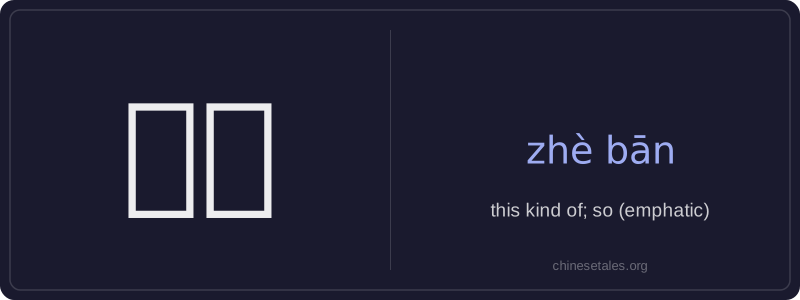
這般 (zhè bān) is a literary and slightly formal expression meaning 'this kind of' or 'so' — used for emphasis, often to convey strong emotion, intensity, or vivid description. The first character 這 means 'this', and 般 means 'kind', 'sort', or 'manner'; together, they literally mean 'this sort (of thing/state)'. It functions adjectivally before nouns (e.g., 這般天氣) or adverbially before verbs/adjectives (e.g., 這般漂亮, 這般辛苦).
It’s commonly found in written Chinese, classical poetry, idioms, and elevated spoken contexts — such as storytelling, emotional appeals, or rhetorical questions. While grammatically similar to 這樣, 這般 carries more poetic weight and solemnity, and is rarely used in casual daily speech. Learners should note that it’s not interchangeable with colloquial terms like 這麼 or 這樣 in informal conversation.
Example Sentences
Related Words
背后
背后 literally means 'back + behind' and functions
认同
‘认同’ (tóng rèn) is a verb meaning ‘to ident
不对
不对 (bù duì) literally combines 不 (bù), meani
中学
'Zhōngxué' literally combines 'zhōng' (middle)
见面
见面 literally means 'see face' — combining 见 (t
面条
‘面条’ (miàn tiáo) literally means ‘flour str
外语
‘外语’ literally means ‘outside language’ —
认可
认可 (rèn kě) is a formal, transitive verb meani