Word Explanation
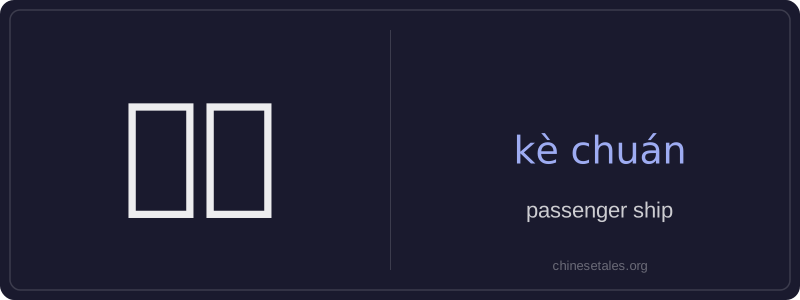
‘客船’ literally means ‘guest ship’ — 客 (kè) means ‘guest’ or ‘passenger’, and 船 (chuán) means ‘ship’ or ‘boat’. Together, they refer specifically to a vessel designed to carry passengers, not cargo or vehicles. Unlike freighters or fishing boats, 客船 prioritizes passenger safety, comfort, and amenities such as cabins, dining areas, and entertainment facilities.
This term is commonly used in transportation contexts — for example, ferries crossing rivers or straits, cruise ships on coastal routes, or high-speed passenger vessels on inland waterways. It’s a neutral, formal term found in timetables, news reports, and official signage. While smaller passenger boats may be called 渡船 (dùchuán, ferry) or 快艇 (kuàitǐng, speedboat), 客船 emphasizes capacity, scheduled service, and regulated operation — often implying medium-to-large size and commercial licensing.
Example Sentences
Related Words
背后
背后 literally means 'back + behind' and functions
认同
‘认同’ (tóng rèn) is a verb meaning ‘to ident
不对
不对 (bù duì) literally combines 不 (bù), meani
中学
'Zhōngxué' literally combines 'zhōng' (middle)
见面
见面 literally means 'see face' — combining 见 (t
面条
‘面条’ (miàn tiáo) literally means ‘flour str
外语
‘外语’ literally means ‘outside language’ —
认可
认可 (rèn kě) is a formal, transitive verb meani