Word Explanation
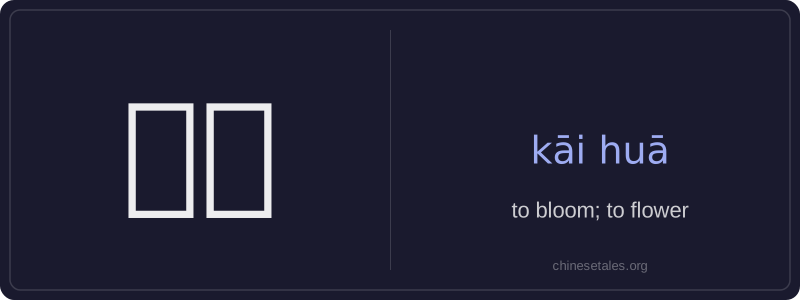
"Kāi huā" literally means "to open flowers" and functions as a verb meaning "to bloom" or "to flower." The character 开 (kāi) means "to open," and 花 (huā) means "flower" — together, they vividly depict the process of flowers unfolding and coming into full bloom. This term is used almost exclusively for plants, especially flowering plants, trees, and shrubs, and emphasizes the moment when buds open and blossoms become visible.
It's commonly used in botanical descriptions, gardening contexts, seasonal observations, and poetic or descriptive writing about nature. While it can appear in metaphors (e.g., "a person's talent begins to kāi huā"), such usage is figurative and relatively rare; the core, everyday meaning remains strictly botanical. The phrase is intransitive — you don’t say *what* something blooms *on*, but rather *when* or *how* it blooms (e.g., in spring, beautifully, early this year).
Example Sentences
Related Words
背后
背后 literally means 'back + behind' and functions
认同
‘认同’ (tóng rèn) is a verb meaning ‘to ident
不对
不对 (bù duì) literally combines 不 (bù), meani
中学
'Zhōngxué' literally combines 'zhōng' (middle)
见面
见面 literally means 'see face' — combining 见 (t
面条
‘面条’ (miàn tiáo) literally means ‘flour str
外语
‘外语’ literally means ‘outside language’ —
认可
认可 (rèn kě) is a formal, transitive verb meani