Word Explanation
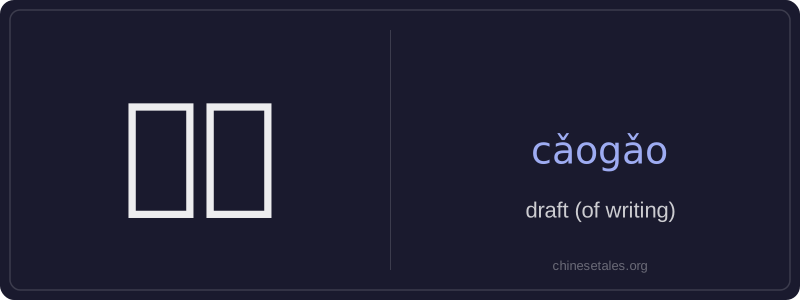
‘草稿’ (cǎogǎo) literally combines ‘草’ (cǎo), meaning ‘grass’ or ‘rough, informal’, and ‘稿’ (gǎo), meaning ‘manuscript’ or ‘draft’. Historically, ‘草’ in compound words often conveys the idea of something preliminary, unrefined, or hastily written—like grass growing quickly and without careful cultivation. So 草稿 refers specifically to an early, unfinished version of a written work: an essay, email, report, or any text meant for revision before final submission.
This word is commonly used in academic, professional, and everyday digital contexts—for example, when saving a half-written document or sharing a tentative outline with colleagues. It implies impermanence and openness to change; no one expects perfection in a 草稿. Unlike formal documents, a 草稿 may contain notes, deletions, or placeholder text. It’s neutral in register—suitable for students, writers, office workers, and even casual note-takers—and appears frequently in software interfaces (e.g., ‘草稿箱’ — draft folder).
Example Sentences
Related Words
背后
背后 literally means 'back + behind' and functions
认同
‘认同’ (tóng rèn) is a verb meaning ‘to ident
不对
不对 (bù duì) literally combines 不 (bù), meani
中学
'Zhōngxué' literally combines 'zhōng' (middle)
见面
见面 literally means 'see face' — combining 见 (t
面条
‘面条’ (miàn tiáo) literally means ‘flour str
外语
‘外语’ literally means ‘outside language’ —
认可
认可 (rèn kě) is a formal, transitive verb meani