Word Explanation
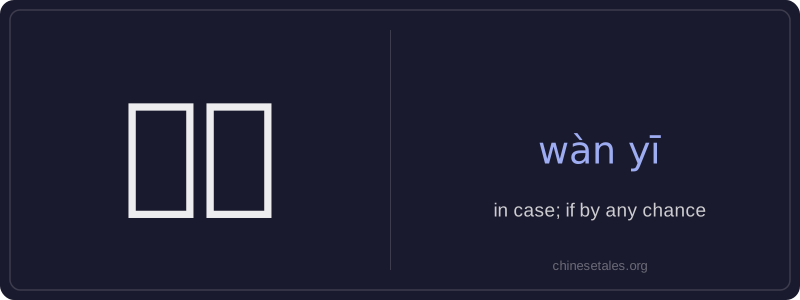
‘万一’ (wàn yī) literally combines ‘ten thousand’ (万) and ‘one’ (一), evoking the idea of an extremely unlikely, almost unimaginable scenario — like ‘one in ten thousand’. In modern usage, it functions as a conjunction or adverb meaning ‘in case’ or ‘if by any chance’, introducing a hypothetical, undesirable, or unexpected situation that one prepares for or worries about. It carries a subtle tone of caution or concern, often implying precautionary action.
This word is commonly used in spoken and written Chinese to express contingency planning or mild anxiety — for example, before traveling, giving instructions, or offering advice. Unlike neutral conditionals like ‘如果’, ‘万一’ emphasizes low probability *and* potential seriousness. It usually appears at the beginning of a clause, followed by a verb phrase or sentence expressing what would happen or be done should that rare event occur.
Example Sentences
Related Words
背后
背后 literally means 'back + behind' and functions
认同
‘认同’ (tóng rèn) is a verb meaning ‘to ident
不对
不对 (bù duì) literally combines 不 (bù), meani
中学
'Zhōngxué' literally combines 'zhōng' (middle)
见面
见面 literally means 'see face' — combining 见 (t
面条
‘面条’ (miàn tiáo) literally means ‘flour str
外语
‘外语’ literally means ‘outside language’ —
认可
认可 (rèn kě) is a formal, transitive verb meani