Word Explanation
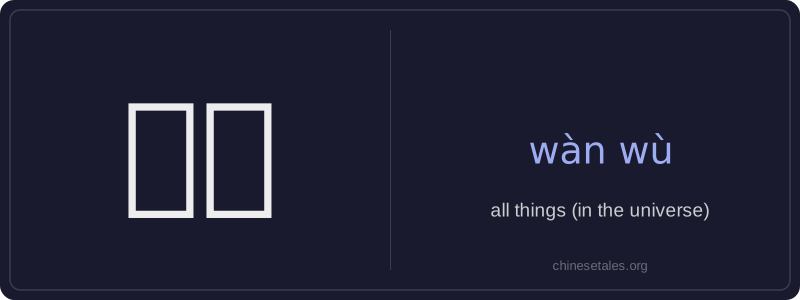
'Wàn wù' literally means 'ten thousand things'—a classical Chinese expression representing the totality of existence in the universe: all living beings, natural phenomena, objects, and forces. The character 万 (wàn) is a large numeral meaning 'ten thousand', used here idiomatically to signify 'innumerable' or 'all'. The character 物 (wù) means 'thing', 'object', or 'entity', especially in a tangible or natural sense. Together, they form a poetic, philosophical noun emphasizing cosmic wholeness and interconnectedness.
This term appears frequently in Daoist and Confucian texts, nature writing, and modern environmental or scientific discourse. It carries a respectful, reverent tone—not neutral like 'everything' in English, but imbued with harmony, balance, and reverence for life. It rarely refers to man-made artifacts alone; instead, it evokes the organic, dynamic web of nature: animals, plants, weather, mountains, rivers, and celestial bodies.
Example Sentences
Related Words
背后
背后 literally means 'back + behind' and functions
认同
‘认同’ (tóng rèn) is a verb meaning ‘to ident
不对
不对 (bù duì) literally combines 不 (bù), meani
中学
'Zhōngxué' literally combines 'zhōng' (middle)
见面
见面 literally means 'see face' — combining 见 (t
面条
‘面条’ (miàn tiáo) literally means ‘flour str
外语
‘外语’ literally means ‘outside language’ —
认可
认可 (rèn kě) is a formal, transitive verb meani