Word Explanation
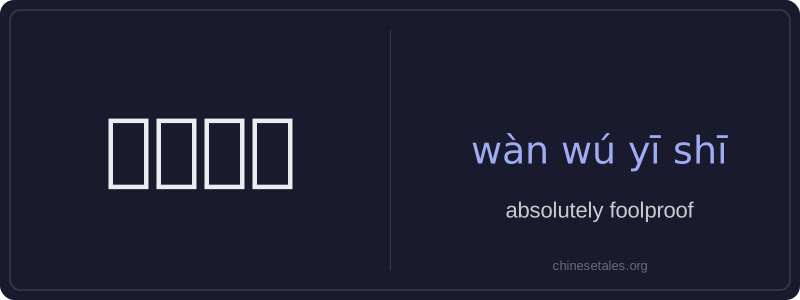
‘万无一失’ literally means ‘ten thousand without one loss’ — a vivid, hyperbolic expression emphasizing total reliability and zero risk of failure. Each character contributes: 万 (ten thousand) signals abundance or totality; 无 (without) negates; 一 (one) represents the smallest possible quantity; 失 (loss/failure) is what’s completely absent. Together, they convey absolute certainty — not just ‘very safe’, but ‘so thoroughly prepared that failure is inconceivable’.
This idiom is commonly used in formal, professional, or high-stakes contexts: security planning, medical procedures, exam preparation, or technical systems. It carries a tone of seriousness and confidence, often appearing in official announcements, safety briefings, or advice from experts. While it sounds strong, it’s not typically used for casual daily tasks (e.g., locking your door), but rather situations where even a tiny error could have serious consequences.
Example Sentences
Related Words
背后
背后 literally means 'back + behind' and functions
认同
‘认同’ (tóng rèn) is a verb meaning ‘to ident
不对
不对 (bù duì) literally combines 不 (bù), meani
中学
'Zhōngxué' literally combines 'zhōng' (middle)
见面
见面 literally means 'see face' — combining 见 (t
面条
‘面条’ (miàn tiáo) literally means ‘flour str
外语
‘外语’ literally means ‘outside language’ —
认可
认可 (rèn kě) is a formal, transitive verb meani