Word Explanation
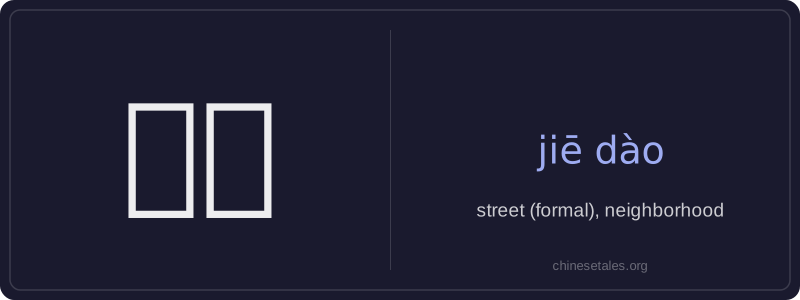
街道 (jiē dào) literally combines 街 (jiē), meaning 'street' or 'commercial thoroughfare', and 道 (dào), meaning 'road', 'path', or 'way'. Together, they form a formal, standard term for 'street'—especially in official, administrative, or urban planning contexts. Unlike colloquial terms like 路 (lù) or 街 (jiē) alone, 街道 carries a slightly bureaucratic or institutional tone and is commonly used in place names (e.g., 北京街道), government departments (e.g., 街道办事处, 'subdistrict office'), and formal descriptions of urban geography.
It can also refer to a neighborhood-level administrative unit in Chinese cities—similar to a 'subdistrict' or 'community jurisdiction'—making it broader than just a physical road. In this sense, it emphasizes governance and local community organization rather than mere geography. While 街道 appears in everyday speech, it’s less common in casual conversation than simpler words like 街 or 路, and more frequent in signs, official documents, news reports, and maps.
Example Sentences
Related Words
背后
背后 literally means 'back + behind' and functions
认同
‘认同’ (tóng rèn) is a verb meaning ‘to ident
不对
不对 (bù duì) literally combines 不 (bù), meani
中学
'Zhōngxué' literally combines 'zhōng' (middle)
见面
见面 literally means 'see face' — combining 见 (t
面条
‘面条’ (miàn tiáo) literally means ‘flour str
外语
‘外语’ literally means ‘outside language’ —
认为
‘认为’ (rèn wéi) is a transitive verb meaning