Word Explanation
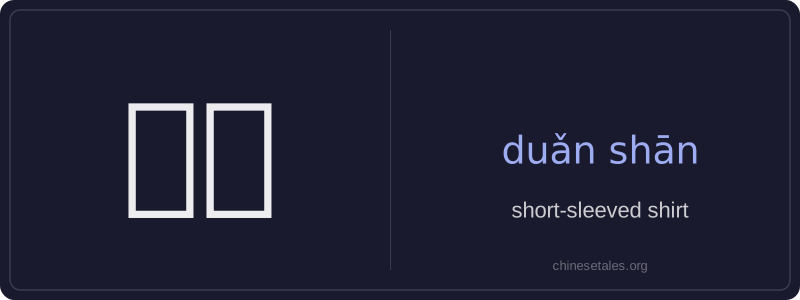
‘短衫’ (duǎn shān) literally combines ‘短’ (duǎn), meaning ‘short’, and ‘衫’ (shān), a classical and literary term for ‘shirt’ or ‘tunic’. Together, it refers specifically to a short-sleeved shirt — typically a casual, lightweight upper garment worn in warm weather. Unlike modern loanwords like T恤 (T-xù), 短衫 carries a slightly traditional or descriptive tone and is often used in written descriptions, historical contexts, or formal product labeling.
This word emphasizes sleeve length rather than cut or style, so it can refer to both collared shirts and simple sleeveless or sleeve-just-below-shoulder styles — though strictly speaking, ‘short sleeves’ implies sleeves ending above the elbow. It’s more common in southern China and in literary or descriptive usage than in everyday spoken Mandarin, where people often say T恤 or 短袖衬衫 instead.
Example Sentences
Related Words
背后
背后 literally means 'back + behind' and functions
认同
‘认同’ (tóng rèn) is a verb meaning ‘to ident
不对
不对 (bù duì) literally combines 不 (bù), meani
中学
'Zhōngxué' literally combines 'zhōng' (middle)
见面
见面 literally means 'see face' — combining 见 (t
面条
‘面条’ (miàn tiáo) literally means ‘flour str
外语
‘外语’ literally means ‘outside language’ —
认为
‘认为’ (rèn wéi) is a transitive verb meaning