Word Explanation
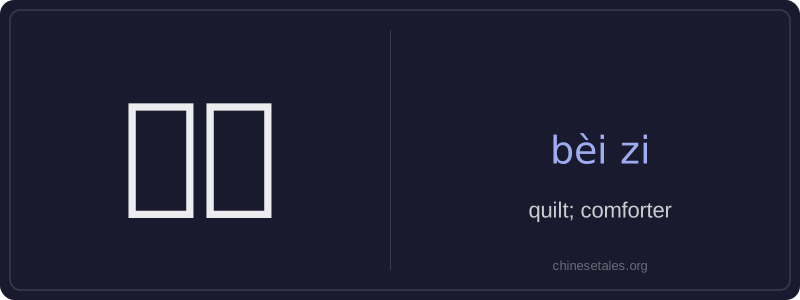
‘被子’ (bèi zi) is a common noun meaning ‘quilt’ or ‘comforter’—a thick, warm bed covering used for sleeping. The first character 被 (bèi) originally meant ‘cover’ or ‘blanket’ and carries that core idea; the second character 子 (zi) is a diminutive or nominalizing suffix, turning the root into a concrete, countable object. Together, they refer specifically to the soft, insulated bedding item people use on top of sheets and under which they sleep, especially in cooler weather.
This word is used daily in home, dormitory, and hotel contexts. Unlike English ‘blanket’, which can be thin and lightweight, 被子 almost always implies thickness, warmth, and full-body coverage—often filled with cotton, down, or synthetic fibers. It’s typically folded at the foot of the bed during the day and spread out at night. While related to other bedding terms like 床单 (chuángdān, ‘bedsheet’) or 枕头 (zhěntou, ‘pillow’), 被子 stands out as the primary insulating layer essential for comfortable sleep in Chinese households.
Example Sentences
Related Words
背后
背后 literally means 'back + behind' and functions
认同
‘认同’ (tóng rèn) is a verb meaning ‘to ident
不对
不对 (bù duì) literally combines 不 (bù), meani
中学
'Zhōngxué' literally combines 'zhōng' (middle)
见面
见面 literally means 'see face' — combining 见 (t
面条
‘面条’ (miàn tiáo) literally means ‘flour str
外语
‘外语’ literally means ‘outside language’ —
认为
‘认为’ (rèn wéi) is a transitive verb meaning