Word Explanation
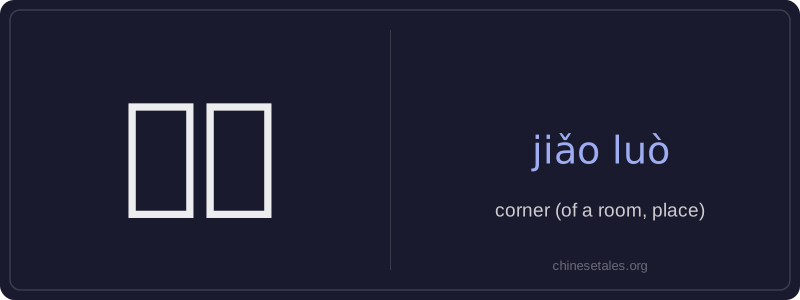
角落 (jiǎo luò) literally combines 角 (jiǎo), meaning 'corner' or 'angle', and 落 (luò), which here functions as a noun suffix indicating a location or spot—though it’s not used independently in this sense. Together, they refer specifically to the physical corner of a room, building, street intersection, or any enclosed or defined space. It evokes a sense of boundedness, quietness, or even seclusion.
The word is neutral in register and widely used in everyday speech and writing. You’ll hear it when describing where something is placed ('the plant is in the corner'), where someone is hiding ('he sat in the corner'), or metaphorically ('a forgotten corner of the city'). Unlike English 'corner', which can also mean a business district (e.g., 'financial corner'), 角落 almost always implies a literal, spatially confined area—not an abstract or commercial concept.
Example Sentences
Related Words
背后
背后 literally means 'back + behind' and functions
认同
‘认同’ (tóng rèn) is a verb meaning ‘to ident
不对
不对 (bù duì) literally combines 不 (bù), meani
中学
'Zhōngxué' literally combines 'zhōng' (middle)
见面
见面 literally means 'see face' — combining 见 (t
面条
‘面条’ (miàn tiáo) literally means ‘flour str
外语
‘外语’ literally means ‘outside language’ —
认为
‘认为’ (rèn wéi) is a transitive verb meaning