Word Explanation
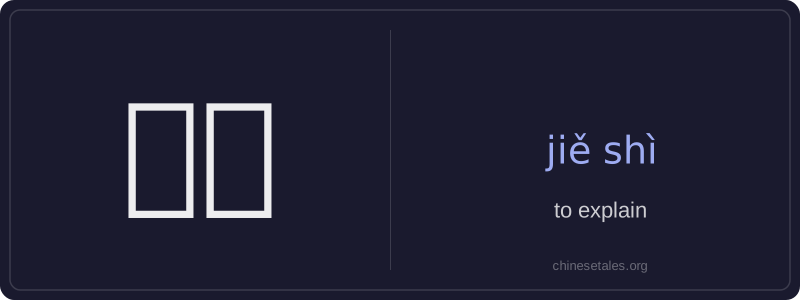
解释 (jiě shì) is a verb meaning 'to explain' — to make something clear or understandable by giving reasons, details, or clarifications. The character 解 (jiě) means 'to untie', 'to separate', or 'to understand', while 释 (shì) means 'to release', 'to interpret', or 'to elucidate'. Together, they form a compound that conveys the idea of 'untying confusion' or 'releasing meaning' — reflecting how explanation removes ambiguity and reveals understanding. It’s commonly used in academic, professional, and everyday contexts when someone provides reasoning, justifies an action, or clarifies a concept.
The word functions as a transitive verb and typically takes a direct object (e.g., 解释这个问题 — 'explain this question'). It can appear in both formal writing and spoken Chinese, though it carries a neutral-to-formal register — less casual than 说说 (shuō shuo, 'tell me about') but more common and versatile than the literary 诠释 (chuán shì, 'interpret'). It often appears after subject + time/aspect markers like 了 or 正在, or in imperative constructions like '请解释一下' ('Please explain').
Example Sentences
Related Words
背后
背后 literally means 'back + behind' and functions
认同
‘认同’ (tóng rèn) is a verb meaning ‘to ident
不对
不对 (bù duì) literally combines 不 (bù), meani
中学
'Zhōngxué' literally combines 'zhōng' (middle)
见面
见面 literally means 'see face' — combining 见 (t
面条
‘面条’ (miàn tiáo) literally means ‘flour str
外语
‘外语’ literally means ‘outside language’ —
认为
‘认为’ (rèn wéi) is a transitive verb meaning