Word Explanation
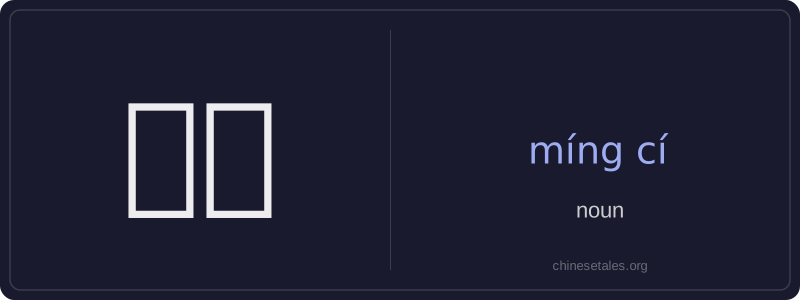
‘名词’ (míng cí) literally means ‘name word’ — ‘名’ (míng) means ‘name’ or ‘reputation’, and ‘词’ (cí) means ‘word’ or ‘term’. Together, they refer to a grammatical category: words that name people, places, things, concepts, or phenomena — what English calls ‘nouns’. In Chinese grammar, nouns often appear as subjects or objects in sentences and typically do not change form for number or case.
Unlike English, Chinese nouns rarely require articles (like ‘a’ or ‘the’) and are not marked for plural by default — context or quantifiers (e.g., 一些, 几个) indicate quantity. Common noun types include proper nouns (e.g., 北京), common nouns (e.g., 桌子), and abstract nouns (e.g., 自由). Recognizing nouns is essential for sentence parsing, especially since word order and function words (like 的, 了) help signal their grammatical role.
Example Sentences
Related Words
背后
背后 literally means 'back + behind' and functions
认同
‘认同’ (tóng rèn) is a verb meaning ‘to ident
不对
不对 (bù duì) literally combines 不 (bù), meani
中学
'Zhōngxué' literally combines 'zhōng' (middle)
见面
见面 literally means 'see face' — combining 见 (t
面条
‘面条’ (miàn tiáo) literally means ‘flour str
外语
‘外语’ literally means ‘outside language’ —
认为
‘认为’ (rèn wéi) is a transitive verb meaning