Word Explanation
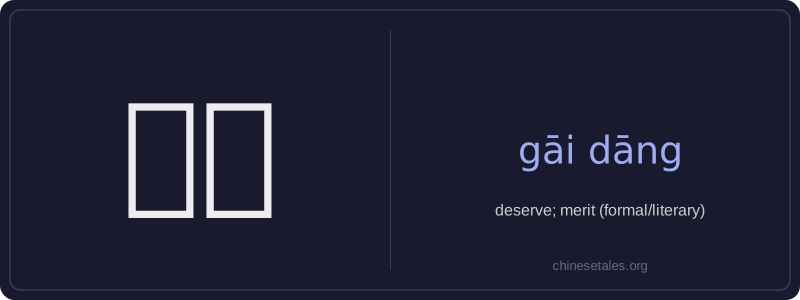
该当 is a formal, literary verb meaning 'to deserve' or 'to merit'—often in the sense of receiving something (positive or negative) as a just consequence. The character 该 carries the sense of 'ought to' or 'should', while 当 means 'to be appropriate' or 'to match'; together, they convey that an outcome is fitting or warranted by one’s actions or nature. It appears frequently in classical Chinese, legal texts, moral discourse, and formal writing, but rarely in casual speech.
This term often implies moral or cosmic justice: someone who has done good deeds 该当 reward; someone who commits serious wrongdoing 该当 punishment. It can also appear in passive constructions with 被 or in rhetorical questions (e.g., '他该当何罪?'). Though grammatically a verb, it typically requires a complement (e.g., 该当受罚, 该当嘉奖) and does not stand alone.
Example Sentences
Related Words
背后
背后 literally means 'back + behind' and functions
认同
‘认同’ (tóng rèn) is a verb meaning ‘to ident
不对
不对 (bù duì) literally combines 不 (bù), meani
中学
'Zhōngxué' literally combines 'zhōng' (middle)
见面
见面 literally means 'see face' — combining 见 (t
面条
‘面条’ (miàn tiáo) literally means ‘flour str
外语
‘外语’ literally means ‘outside language’ —
认为
‘认为’ (rèn wéi) is a transitive verb meaning