Word Explanation
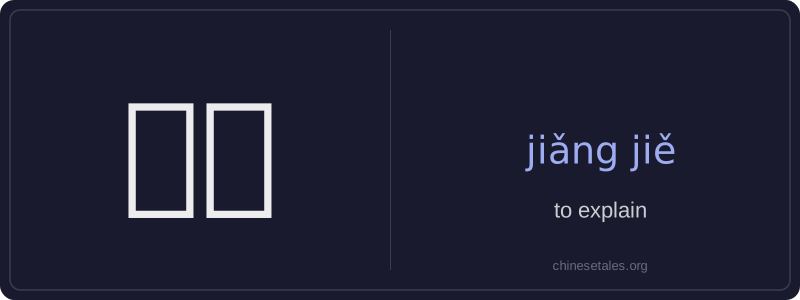
讲解 means 'to explain' — a formal, clear, and often step-by-step verbal presentation of information. It combines 讲 (jiǎng), meaning 'to speak' or 'to lecture', and 解 (jiě), meaning 'to untie' or 'to resolve', together evoking the idea of 'untying complexity through speech'. Unlike casual explanations (e.g., 说清楚), 讲解 implies structured, pedagogical communication — commonly used in teaching, technical demonstrations, museum tours, or software tutorials.
This word functions as a transitive verb and typically takes a direct object (e.g., 讲解规则, 讲解过程). It can also serve as a noun meaning 'an explanation' or 'a lecture', especially in contexts like 教学讲解 (teaching explanation) or 视频讲解 (video explanation). While it sounds neutral and professional, it is rarely used in informal chats among friends — there, 说明 or 说说 would be more natural.
Example Sentences
Related Words
背后
背后 literally means 'back + behind' and functions
认同
‘认同’ (tóng rèn) is a verb meaning ‘to ident
不对
不对 (bù duì) literally combines 不 (bù), meani
中学
'Zhōngxué' literally combines 'zhōng' (middle)
见面
见面 literally means 'see face' — combining 见 (t
面条
‘面条’ (miàn tiáo) literally means ‘flour str
外语
‘外语’ literally means ‘outside language’ —
认为
‘认为’ (rèn wéi) is a transitive verb meaning