Word Explanation
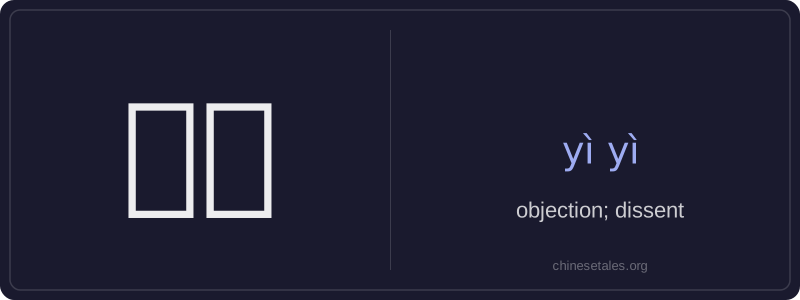
异议 (yì yì) is a noun meaning 'objection' or 'dissent' — a formal expression of disagreement, often in discussions, meetings, legal contexts, or decision-making processes. The first character 异 means 'different' or 'unusual', and the second character 议 means 'to discuss' or 'opinion'. Together, they literally suggest 'a different opinion' or 'a divergent view raised in discussion'. It implies more than casual disagreement; it carries weight and is usually voiced with intention and reasoning.
This word is commonly used in professional, academic, or administrative settings — for example, when someone formally challenges a proposal, policy, or verdict. It’s neutral in tone but leans formal; you wouldn’t use it in casual chats among friends ('I don’t like that movie'). Instead, it appears in minutes of meetings, legal documents, news reports, or workplace feedback. While it can stand alone as a noun, it’s often paired with verbs like 提出 (tíchū, 'to raise'), 表示 (biǎoshì, 'to express'), or 存在 (cúnzài, 'to exist').
Example Sentences
Related Words
背后
背后 literally means 'back + behind' and functions
认同
‘认同’ (tóng rèn) is a verb meaning ‘to ident
不对
不对 (bù duì) literally combines 不 (bù), meani
中学
'Zhōngxué' literally combines 'zhōng' (middle)
见面
见面 literally means 'see face' — combining 见 (t
面条
‘面条’ (miàn tiáo) literally means ‘flour str
外语
‘外语’ literally means ‘outside language’ —
认为
‘认为’ (rèn wéi) is a transitive verb meaning