Word Explanation
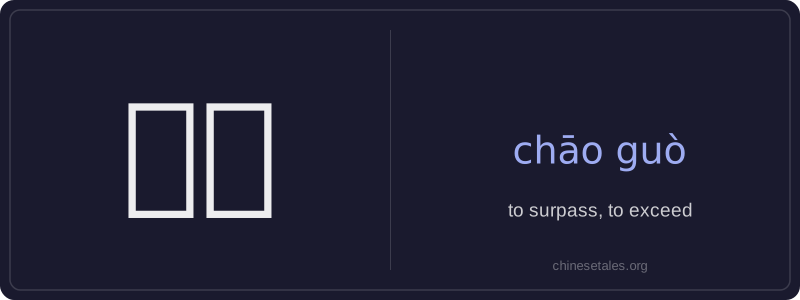
超过 (chāo guò) is a verb meaning 'to surpass', 'to exceed', or 'to go beyond' a limit, standard, number, or expectation. The character 超 (chāo) means 'to go beyond' or 'to transcend', while 过 (guò) adds the sense of 'passing over' or 'crossing past' — together they emphasize crossing a threshold. It is commonly used with numbers (e.g., time, quantity, scores), standards (e.g., speed limits, expectations), or abstract benchmarks (e.g., expectations, norms).
This word appears frequently in formal and neutral contexts — news reports, academic writing, official documents, and everyday comparisons. Unlike the more colloquial verb 比…多/少, 超过 always implies a clear quantitative or qualitative boundary has been crossed. It often takes an object directly (no particle needed), and the object is typically introduced by the preposition 比 only in comparative constructions where it functions as part of a larger clause.
Example Sentences
Related Words
背后
背后 literally means 'back + behind' and functions
认同
‘认同’ (tóng rèn) is a verb meaning ‘to ident
不对
不对 (bù duì) literally combines 不 (bù), meani
中学
'Zhōngxué' literally combines 'zhōng' (middle)
见面
见面 literally means 'see face' — combining 见 (t
面条
‘面条’ (miàn tiáo) literally means ‘flour str
外语
‘外语’ literally means ‘outside language’ —
认为
‘认为’ (rèn wéi) is a transitive verb meaning