Word Explanation
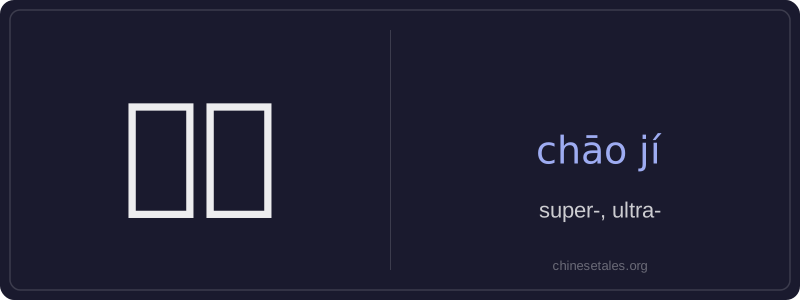
超级 (chāo jí) is a common adjective meaning 'super-' or 'ultra-', used to intensify nouns and adjectives—similar to English prefixes like 'super-' or 'mega-'. The first character 超 means 'to exceed' or 'beyond', while 级 means 'level' or 'grade'; together, they literally suggest 'beyond the standard level', conveying exceptional degree or quality. It's widely used in informal speech and advertising, especially with nouns (e.g., 超级市场 'supermarket') and adjectives (e.g., 超级棒 'super great').
This term is highly productive in modern Chinese: it frequently modifies people (超级明星 'superstar'), objects (超级电脑 'supercomputer'), and abstract concepts (超级喜欢 'super like'). Unlike formal synonyms like 极其 (jí qí), 超级 carries a lively, colloquial tone and is rarely used in formal writing or academic contexts. It’s especially popular among younger speakers and in digital communication.
Example Sentences
Related Words
背后
背后 literally means 'back + behind' and functions
认同
‘认同’ (tóng rèn) is a verb meaning ‘to ident
不对
不对 (bù duì) literally combines 不 (bù), meani
中学
'Zhōngxué' literally combines 'zhōng' (middle)
见面
见面 literally means 'see face' — combining 见 (t
面条
‘面条’ (miàn tiáo) literally means ‘flour str
外语
‘外语’ literally means ‘outside language’ —
认为
‘认为’ (rèn wéi) is a transitive verb meaning