Word Explanation
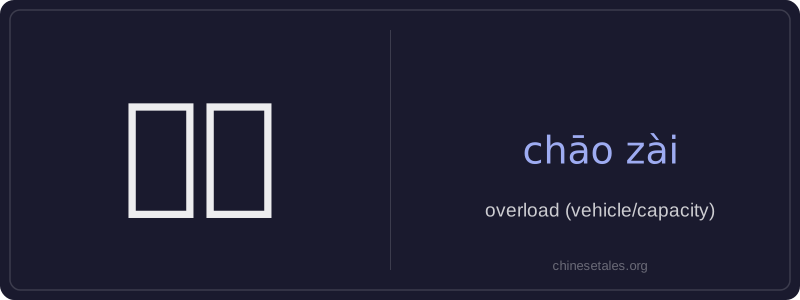
‘超载’ literally means ‘beyond carrying’ — ‘超’ (chāo) means ‘beyond’ or ‘exceeding’, and ‘载’ (zài) means ‘to carry’ or ‘to load’. Together, they form a noun describing the state of being loaded beyond safe or legal capacity, most commonly applied to vehicles (e.g., buses, trucks, elevators) but also used metaphorically for systems, servers, or even workloads. It implies a dangerous or prohibited condition, not just ‘full’ — there’s always an implied standard or limit that has been crossed.
This word appears frequently in public safety announcements, traffic regulations, and news reports about accidents or inspections. Unlike general terms like ‘拥挤’ (crowded), ‘超载’ carries a technical, regulatory connotation: it suggests violation of official limits, often with legal consequences. It is rarely used for abstract concepts like emotions or time, and almost never for living beings as carriers (e.g., you wouldn’t say a person is ‘超载’ — use ‘负担过重’ instead).
Example Sentences
Related Words
背后
背后 literally means 'back + behind' and functions
认同
‘认同’ (tóng rèn) is a verb meaning ‘to ident
不对
不对 (bù duì) literally combines 不 (bù), meani
中学
'Zhōngxué' literally combines 'zhōng' (middle)
见面
见面 literally means 'see face' — combining 见 (t
面条
‘面条’ (miàn tiáo) literally means ‘flour str
外语
‘外语’ literally means ‘outside language’ —
认为
‘认为’ (rèn wéi) is a transitive verb meaning