Word Explanation
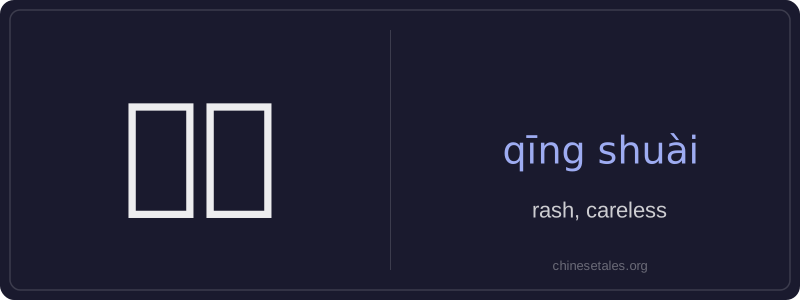
轻率 (qīng shuài) is an adjective meaning 'rash' or 'careless'—describing actions, decisions, or judgments made without sufficient thought, caution, or consideration of consequences. The first character 轻 (qīng) literally means 'light' or 'not heavy', suggesting something lacking weight or seriousness; the second character 率 (shuài) conveys 'to lead' or 'to act impulsively', and in this compound it contributes the sense of hasty or unreflective action. Together, they evoke the image of acting as if the matter were 'light'—trivializing its importance.
This word is commonly used to criticize decisions in personal, professional, or social contexts—especially when someone jumps to conclusions, gives advice prematurely, or acts without gathering facts. It carries a mild-to-moderate negative tone and often appears in formal writing, news reports, or serious conversations. While not extremely harsh, it implies a failure of responsibility or prudence, and is frequently paired with nouns like 决定 (decision), 判断 (judgment), or 行为 (behavior).
Example Sentences
Related Words
面条
‘面条’ (miàn tiáo) literally means ‘flour str
背后
背后 literally means 'back + behind' and functions
认同
‘认同’ (tóng rèn) is a verb meaning ‘to ident
不对
不对 (bù duì) literally combines 不 (bù), meani
中学
'Zhōngxué' literally combines 'zhōng' (middle)
见面
见面 literally means 'see face' — combining 见 (t
外语
‘外语’ literally means ‘outside language’ —
认为
‘认为’ (rèn wéi) is a transitive verb meaning