Word Explanation
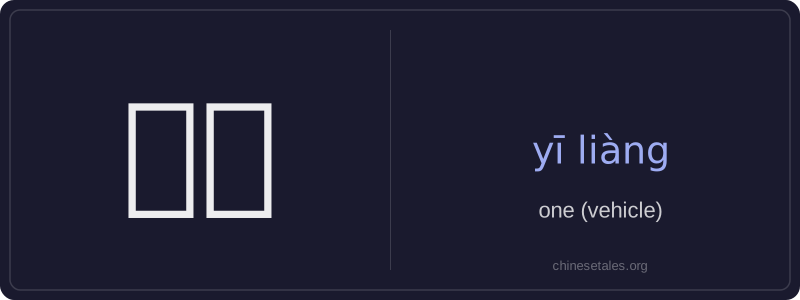
‘一辆’ (yī liàng) is a measure word phrase meaning 'one (vehicle)' — specifically used for cars, buses, trucks, motorcycles, and other motorized vehicles. The first character ‘一’ (yī) means 'one', while ‘辆’ (liàng) is a classifier exclusively for wheeled vehicles with an enclosed cabin or frame. Unlike general counters like ‘个’ (gè), ‘辆’ cannot be used for people, animals, or objects — it only applies to vehicles that carry passengers or cargo on wheels.
This phrase appears in everyday contexts such as traffic descriptions, transportation planning, shopping, or giving directions. It always precedes the noun it modifies — for example, ‘一辆车’ (yī liàng chē, 'one car') or ‘一辆公交车’ (yī liàng gōngjiāo chē, 'one bus'). Because Chinese requires classifiers with numerals, you cannot say ‘一个车’; ‘辆’ is grammatically required here, making ‘一辆’ an inseparable unit when counting vehicles.
Example Sentences
Related Words
面条
‘面条’ (miàn tiáo) literally means ‘flour str
背后
背后 literally means 'back + behind' and functions
认同
‘认同’ (tóng rèn) is a verb meaning ‘to ident
不对
不对 (bù duì) literally combines 不 (bù), meani
中学
'Zhōngxué' literally combines 'zhōng' (middle)
见面
见面 literally means 'see face' — combining 见 (t
外语
‘外语’ literally means ‘outside language’ —
认为
‘认为’ (rèn wéi) is a transitive verb meaning