Word Explanation
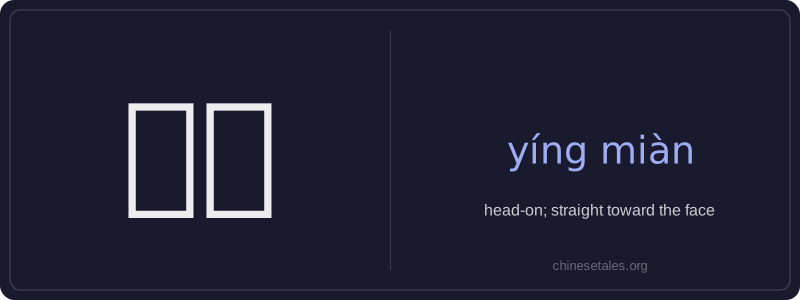
迎面 literally means 'to meet the face' — combining 迎 (yíng, 'to welcome, to face') and 面 (miàn, 'face, surface'). It functions primarily as an adverb describing motion or direction that comes straight toward the observer’s front — head-on, directly in front, or facing one squarely. It emphasizes immediacy and directness of approach, often implying physical proximity or confrontation.
This word is commonly used with verbs of movement (e.g., 走来, 吹来, 扑来) or perception (e.g., 看见, 感到). It frequently appears in descriptive writing and everyday speech when describing wind, people walking toward you, vehicles approaching, or even abstract things like criticism or challenges coming directly at someone. While it can appear in formal writing, it's equally natural in conversational contexts — especially when conveying vivid spatial awareness.
Example Sentences
Related Words
面条
‘面条’ (miàn tiáo) literally means ‘flour str
背后
背后 literally means 'back + behind' and functions
认同
‘认同’ (tóng rèn) is a verb meaning ‘to ident
不对
不对 (bù duì) literally combines 不 (bù), meani
中学
'Zhōngxué' literally combines 'zhōng' (middle)
见面
见面 literally means 'see face' — combining 见 (t
外语
‘外语’ literally means ‘outside language’ —
认为
‘认为’ (rèn wéi) is a transitive verb meaning