Word Explanation
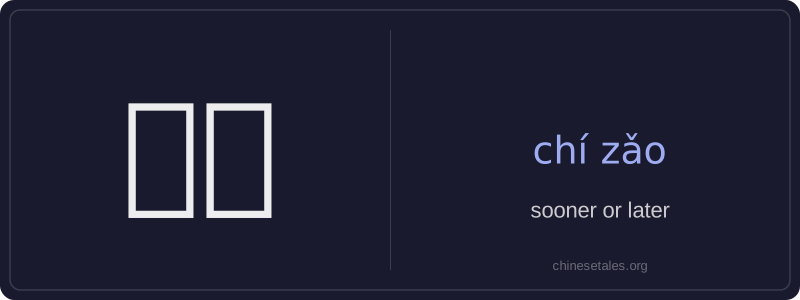
迟早 (chí zǎo) is an adverb meaning 'sooner or later' — it expresses inevitability over time, emphasizing that something will definitely happen, though the exact timing is unspecified. Literally, 迟 means 'late' and 早 means 'early', so together they frame the full range of possible times: from the earliest possible moment to the latest possible moment. This contrastive pairing creates a rhetorical sense of completeness — no matter when, it *will* occur.
The phrase is commonly used in both spoken and written Chinese to convey certainty about future outcomes, often with a tone of resignation, patience, or quiet confidence. It frequently appears in statements about consequences (e.g., bad habits catching up), natural processes (e.g., aging), or social truths (e.g., truth coming out). While grammatically flexible, it typically modifies verbs or whole clauses and usually appears at the beginning or middle of a sentence.
Example Sentences
Related Words
认同
‘认同’ (tóng rèn) is a verb meaning ‘to ident
面条
‘面条’ (miàn tiáo) literally means ‘flour str
背后
背后 literally means 'back + behind' and functions
认为
‘认为’ (rèn wéi) is a transitive verb meaning
不对
不对 (bù duì) literally combines 不 (bù), meani
中学
'Zhōngxué' literally combines 'zhōng' (middle)
见面
见面 literally means 'see face' — combining 见 (t
外语
‘外语’ literally means ‘outside language’ —