Word Explanation
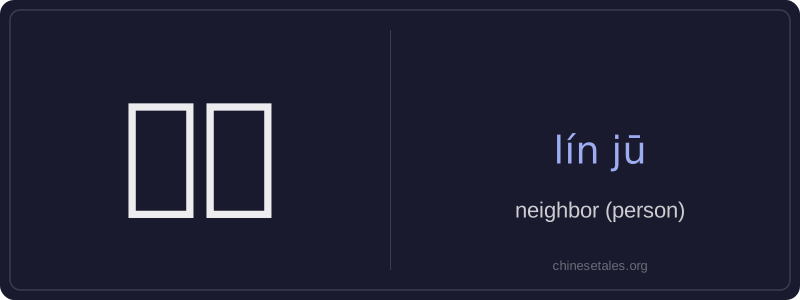
‘邻居’ (lín jū) literally combines ‘邻’ (lín), meaning ‘adjacent’ or ‘nearby’, and ‘居’ (jū), meaning ‘to reside’ or ‘dwelling’. Together, they refer to a person who lives near you—typically in the same building, apartment complex, or neighborhood. It emphasizes proximity and shared physical space, not just general familiarity. Unlike English ‘neighbor’, which can sometimes imply social closeness, ‘邻居’ is strictly geographic; you may know your neighbors well—or not at all.
This word is commonly used in everyday conversation, community announcements, and housing-related contexts. It’s neutral in register (neither formal nor slang) and appears frequently in phrases like ‘好邻居’ (hǎo lín jū, ‘good neighbor’) or ‘新邻居’ (xīn lín jū, ‘new neighbor’). It does not refer to countries or abstract concepts—only people residing nearby.
Example Sentences
Related Words
认同
‘认同’ (tóng rèn) is a verb meaning ‘to ident
面条
‘面条’ (miàn tiáo) literally means ‘flour str
背后
背后 literally means 'back + behind' and functions
认为
‘认为’ (rèn wéi) is a transitive verb meaning
不对
不对 (bù duì) literally combines 不 (bù), meani
中学
'Zhōngxué' literally combines 'zhōng' (middle)
见面
见面 literally means 'see face' — combining 见 (t
外语
‘外语’ literally means ‘outside language’ —