Word Explanation
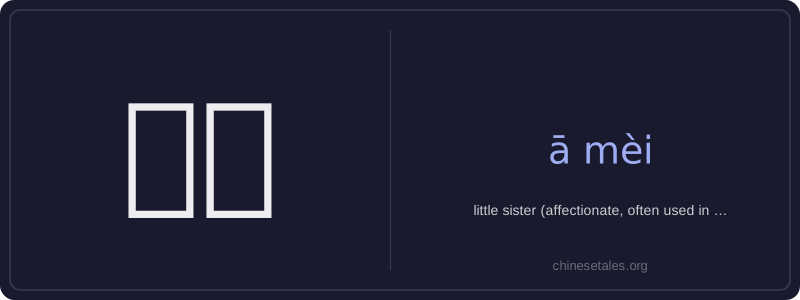
‘Ā mèi’ is an affectionate, informal term for ‘little sister’, commonly used in southern China and among several ethnic minority groups—especially the Zhuang, Yao, and Miao peoples—as a warm, familiar way to address or refer to a younger female sibling or sometimes even a close young female friend. The character 阿 (ā) is a prefix used before names or kinship terms to convey intimacy or endearment, while 妹 (mèi) means ‘younger sister’. Together, they form a compound that emphasizes closeness rather than strict biological relation.
This term carries regional and cultural resonance: it’s especially frequent in oral speech, folk songs, and local media from Guangxi, Yunnan, and Guizhou provinces. Unlike the standard term 妹妹 (mèimei), 阿妹 feels more rustic, poetic, or culturally grounded—and is rarely used in formal writing or northern Mandarin contexts. It may also appear in titles of songs or stories evoking ethnic identity or rural life.
Example Sentences
Related Words
认同
‘认同’ (tóng rèn) is a verb meaning ‘to ident
面条
‘面条’ (miàn tiáo) literally means ‘flour str
背后
背后 literally means 'back + behind' and functions
认为
‘认为’ (rèn wéi) is a transitive verb meaning
不对
不对 (bù duì) literally combines 不 (bù), meani
中学
'Zhōngxué' literally combines 'zhōng' (middle)
见面
见面 literally means 'see face' — combining 见 (t
外语
‘外语’ literally means ‘outside language’ —